


Banggai Islands – Members of seaweed farming communities in Komba-Komba Village, Banggai Islands Regency, Central Sulawesi, held a community workshop on Tuesday (July 23) to strengthen efforts to protect karst landscapes, freshwater springs, and coastal ecosystems from the threat of limestone mining. The initiative was supported by Publish What You Pay (PWYP) Indonesia in collaboration with the Kompas Peduli Hutan Foundation (KOMIU) as part of a community-led effort to safeguard locally managed territories.
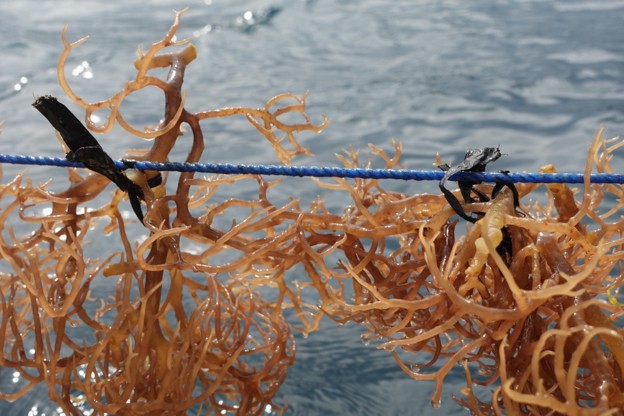
The workshop began with a village meeting focused on building collective awareness of the importance of conserving karst ecosystems as critical water catchment areas and protecting freshwater springs that sustain local livelihoods. Participants also discussed the vital role of karst landscapes in maintaining healthy coastal ecosystems, which provide the environmental foundation for seaweed farming—the community’s primary source of income.
Karst ecosystems function as natural reservoirs that store and regulate groundwater, supplying freshwater that ultimately flows into coastal areas. Damage to these landscapes can reduce water availability, increase sedimentation, and degrade coastal ecosystems that support both biodiversity and seaweed cultivation.
A total of 20 participants representing four community groups, including customary leaders and other respected community representatives, took part in the workshop. Discussions were lively, participatory, and reflected strong community engagement.
The workshop—consisting of awareness-raising sessions and community consolidation—is part of a broader community-based program designed to strengthen local capacity to protect karst ecosystems, freshwater springs, and coastal areas from the expansion of limestone mining. The initiative also contributes to wider efforts to address the climate crisis in the Banggai Islands.
The broader program will eventually engage at least 50 community members in developing a joint action plan for sustainable coastal ecosystem management and protection. Participants also aim to advocate for the designation of “no-go zones” covering karst landscapes, freshwater springs, and coastal ecosystems recognized as environmentally sensitive and of high ecological value.
Throughout the workshop, participants emphasized the importance of collaboration between local communities, village governments, and other stakeholders to safeguard the natural resources that sustain the livelihoods of coastal communities.
Limestone mining poses significant environmental risks if not properly managed. It can destroy strategic ecological assets—including karst formations, freshwater springs, and coastal ecosystems—that are essential to community well-being. Local residents fear that mining activities could damage water sources, degrade coastal environmental quality, and reduce the productivity of seaweed farming, the primary livelihood for people in Komba-Komba Village.
Handri Likak, Chair of the Komba-Komba Village Consultative Body (BPD), highlighted the importance of the initiative in fostering collective awareness to protect the natural resources that sustain communities across the Banggai Islands, including his own village.
He expressed appreciation for the support provided by PWYP Indonesia and KOMIU in promoting community-led environmental protection initiatives, particularly efforts to prevent degradation of coastal ecosystems that could further intensify the impacts of the climate crisis.
“We fully support this initiative. The support from PWYP Indonesia and KOMIU will help protect our karst ecosystems, freshwater springs, and coastal areas from the threat of limestone mining in Komba-Komba Village. This activity will strengthen public awareness of the importance of protecting the environment that sustains all of us,” he said.
One of the village’s women leaders, Karlin Siloto, also participated in the workshop and expressed her support for protecting these vital ecosystems. She encouraged women to play a more active and visible role in safeguarding their village from environmental degradation caused by limestone mining. According to her, the initiative creates greater opportunities for women’s meaningful participation in environmental conservation.
“This activity has given us new information and knowledge. As women, we now have greater opportunities to participate in protecting the karst ecosystems in our area,” she said.
Through this series of workshops, awareness sessions, and community consolidation activities, participants not only deepened their understanding of the ecological importance of karst landscapes and coastal ecosystems but also strengthened their collective commitment to developing concrete action plans to protect karst areas, freshwater springs, and coastal environments.
The initiative is expected to lay the foundation for a community-driven movement to safeguard the natural resources that support local livelihoods, strengthen the seaweed-based local economy, promote environmental sustainability, and enhance resilience to the climate crisis in the Banggai Islands.
Author: Given
Reviewers: Ariyansah NK & Meliana Lumbantoruan