


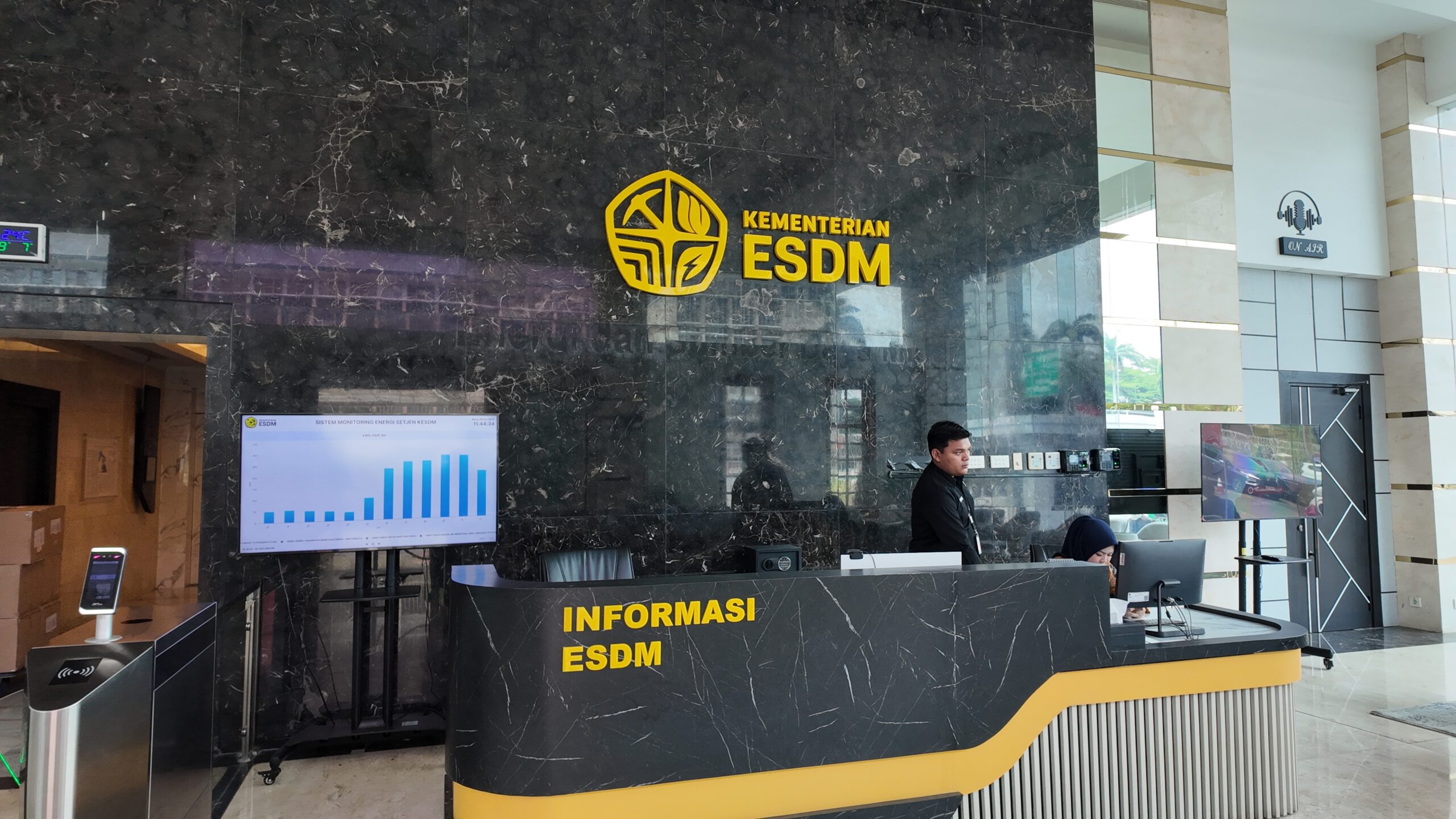
Jakarta, 29 July 2026 – The Women and Vulnerable Groups Leading a Transformative and Just Energy Transition (WE FOR JET) Coalition officially submitted its recommendations on the substance of the revised National Energy General Plan (RUEN) 2026–2035 to the Planning Bureau of the Secretariat General of the Ministry of Energy and Mineral Resources (ESDM). The handover took place at the Secretariat General Office of the Ministry of ESDM in Central Jakarta.
The coalition, whose members include Penabulu, Publish What You Pay (PWYP) Indonesia, the Association of LBH APIK Indonesia, the GEDSI-JET Working Group NTB, Gema Alam, the Social Study and Development Foundation (YPPS), and CIS Timor, urged the government to substantively incorporate the principles of Gender Equality, Disability, and Social Inclusion (GEDSI)—not merely as a formality—into the national energy planning document. The RUEN revision is a consequence of the issuance of Government Regulation Number 40 of 2025 on National Energy Policy (KEN), which replaces the previous KEN, while the current implementation of RUEN still refers to Presidential Regulation Number 22 of 2017.
“We submit these recommendations as a form of civil society oversight in the energy sector regarding inclusivity issues that have long remained unanswered in the national energy planning document,” said Mouna Wasef, Head of the Research and Advocacy Division of PWYP Indonesia. Mouna emphasized that an elitist formulation of RUEN without meaningful participation from women, persons with disabilities, and indigenous communities would only perpetuate new forms of marginalization. “Energy justice must begin with equal involvement at the planning table, not merely as a formality in the document,” she stressed.
Khotimun Sutanti, Executive Director of the Association of LBH APIK Indonesia, reminded that since 2017 a number of policies have explicitly mandated the integration of gender dimensions and vulnerable groups, including the Comprehensive Investment and Policy Plan Just Energy Transition Partnership (JETP-CIPP) 2023, the National Action Plan on Gender and Climate Change (RAN-GPI) 2024, and the National Medium-Term Development Plan (RPJMN) 2025–2029. “Therefore, RUEN 2026–2035 should serve as an instrument to translate these commitments into measurable and implementable sectoral policies,” she said.
Meanwhile, Deden Ramadani, Head of MEAL at Penabulu, highlighted the unequal benefits of energy development on the ground. “Experience across various regions shows that the impacts and benefits of energy development have not been equally felt by all community groups. Women, persons with disabilities, indigenous communities, as well as communities in island regions and vulnerable areas have experiences and needs that must be taken into account in national energy planning. RUEN 2026–2035 needs to place the GEDSI perspective as part of the policy foundation so that Indonesia’s energy transition proceeds more justly and delivers benefits for all,” he explained.
The WE FOR JET Coalition called for explicit recognition of human rights instruments, particularly the Convention on the Elimination of All Forms of Discrimination against Women (CEDAW) and the Convention on the Rights of Persons with Disabilities (CRPD), as the foundation in the RUEN considerations. It also urged the mandatory use of gender- and disability-disaggregated data at every stage of energy planning and modeling, from national to local levels, and prioritized the implementation of affirmative subsidy schemes and the mainstreaming of renewable energy programs for households. Formal representation of vulnerable groups must be guaranteed in consultation mechanisms at every stage of the formulation, implementation, and evaluation of energy policies, in accordance with the standard of meaningful participation set forth in Constitutional Court Decision Number 91/PUU-XVIII/2020.
In addition, the coalition urged alignment between climate targets and the safeguarding of fiscal space. RUEN’s ambition must lock in Nationally Determined Contribution (NDC) targets progressively and firmly close the exemption for captive coal-fired power plant permits. RUEN must not prioritize false solutions such as biomass co-firing and gasification, which risk burdening the state budget, triggering the seizure of community living spaces, and increasing the vulnerability of women and other vulnerable groups to various forms of violence, including gender-based violence.
Other recommendations include recognition of a community-based energy definition, micro-financing schemes for village energy initiatives, strengthening the governance of Regional-Owned Enterprises (BUMD) in regional renewable energy development, rights-based governance for critical mineral supply chains (nickel and tin), and the integration of RUEN with the Regional Energy General Plan so that oil, gas, and coal-producing regions have a roadmap for mitigating the socio-economic impacts of the energy transition.
“The current direction of energy policy risks widening structural poverty, especially for women and persons with disabilities, due to gender-neutral policies. We urge RUEN to operationally mandate the use of disaggregated data so that subsidy distribution, technology access, and social protection are truly precise and well-targeted,” Mouna stated.
“A successful energy transition is one led by those most affected. Without disaggregated data and real representation, RUEN risks repeating the old pattern: women and vulnerable groups bear the burden but are least involved in decision-making. These recommendations constitute a strategic step to reduce dependence on fossil energy and accelerate decarbonization without sacrificing transparent and accountable governance,” she concluded.
Contact persons:
Mouna Wasef ([email protected])
Deden Ramadani ([email protected])
Khotimun Sutanti ([email protected])