


Following the blockade of the Strait of Hormuz after attacks by the United States and Israel on Iran, a narrative has emerged in the media and among analysts about a “coal resurgence.” However, the data suggests otherwise.
An analysis by the Center for Research on Energy and Clean Air (CREA) shows that the global energy crisis has prompted many countries to accelerate the clean energy transition, while coal use has declined.
CREA analyzed real-time data from 87% of the world’s coal-fired power plants and more than 60% of gas-fired power plants. The results show that global coal- and gas-based electricity generation (outside China) declined by 3.5% and 4%, respectively. In contrast, electricity generation from solar (14%) and wind (8%) increased significantly.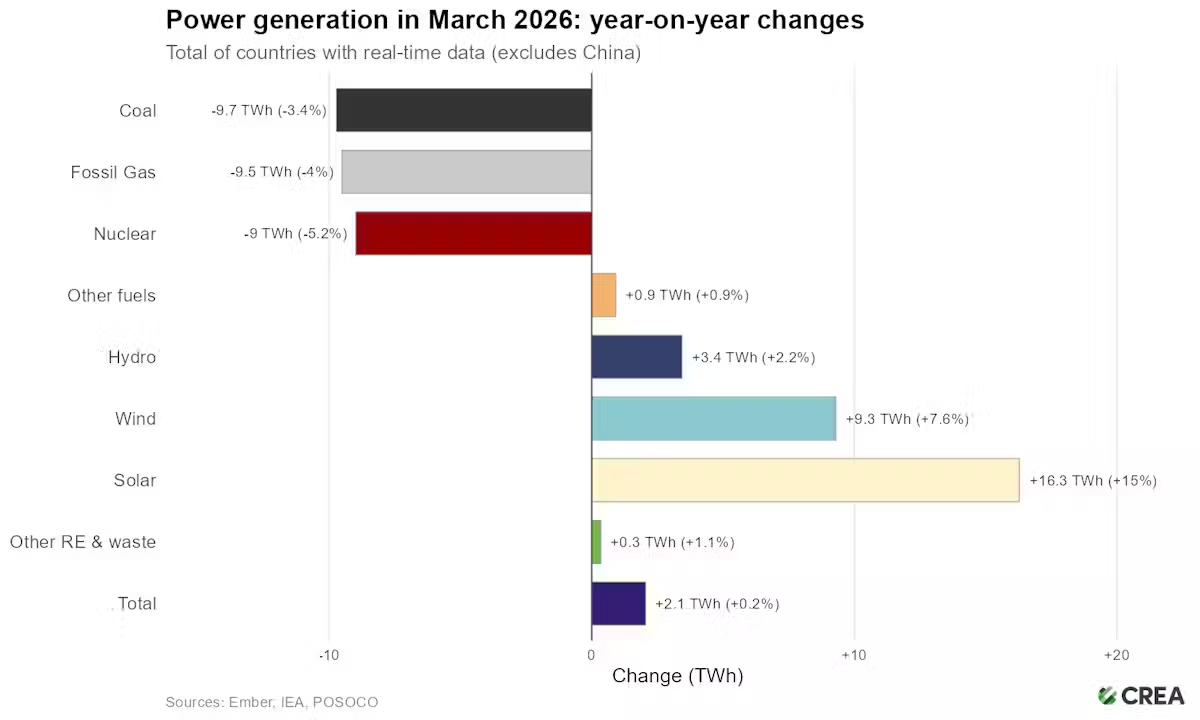 The electricity generation dataset used in CREA’s analysis covers 87% of global coal-fired generation and more than 60% of gas-fired generation, including the world’s largest electricity markets: China, the United States, the European Union, and India. Overall, fossil fuel-based electricity generation in countries with real-time data availability fell by 1% compared to the previous year. Coal-based power generation remained relatively stagnant, while gas-based generation declined by 4%.
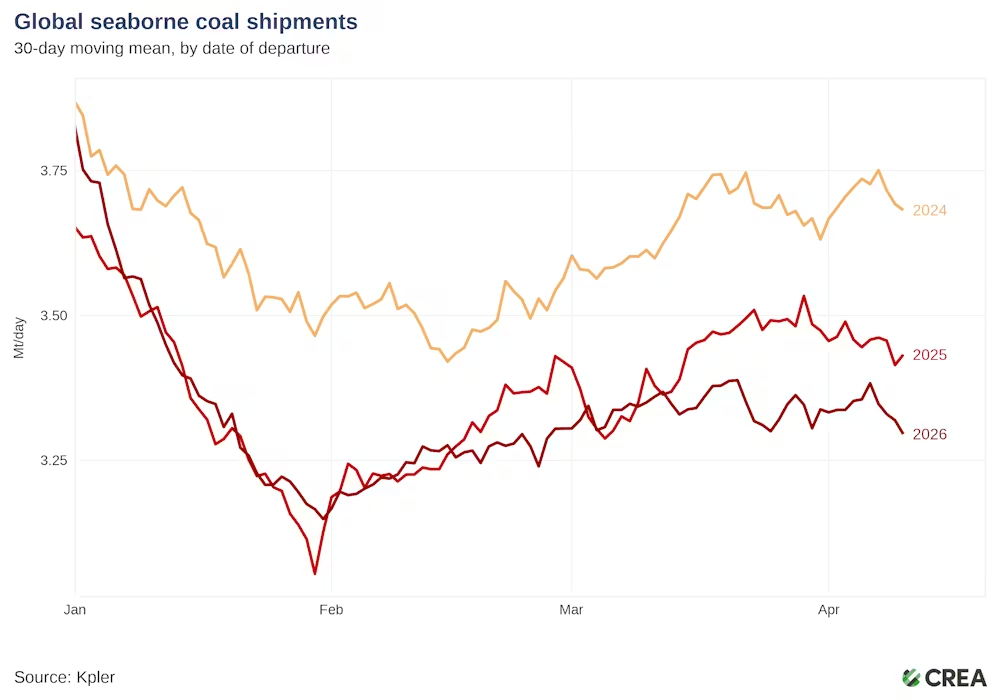
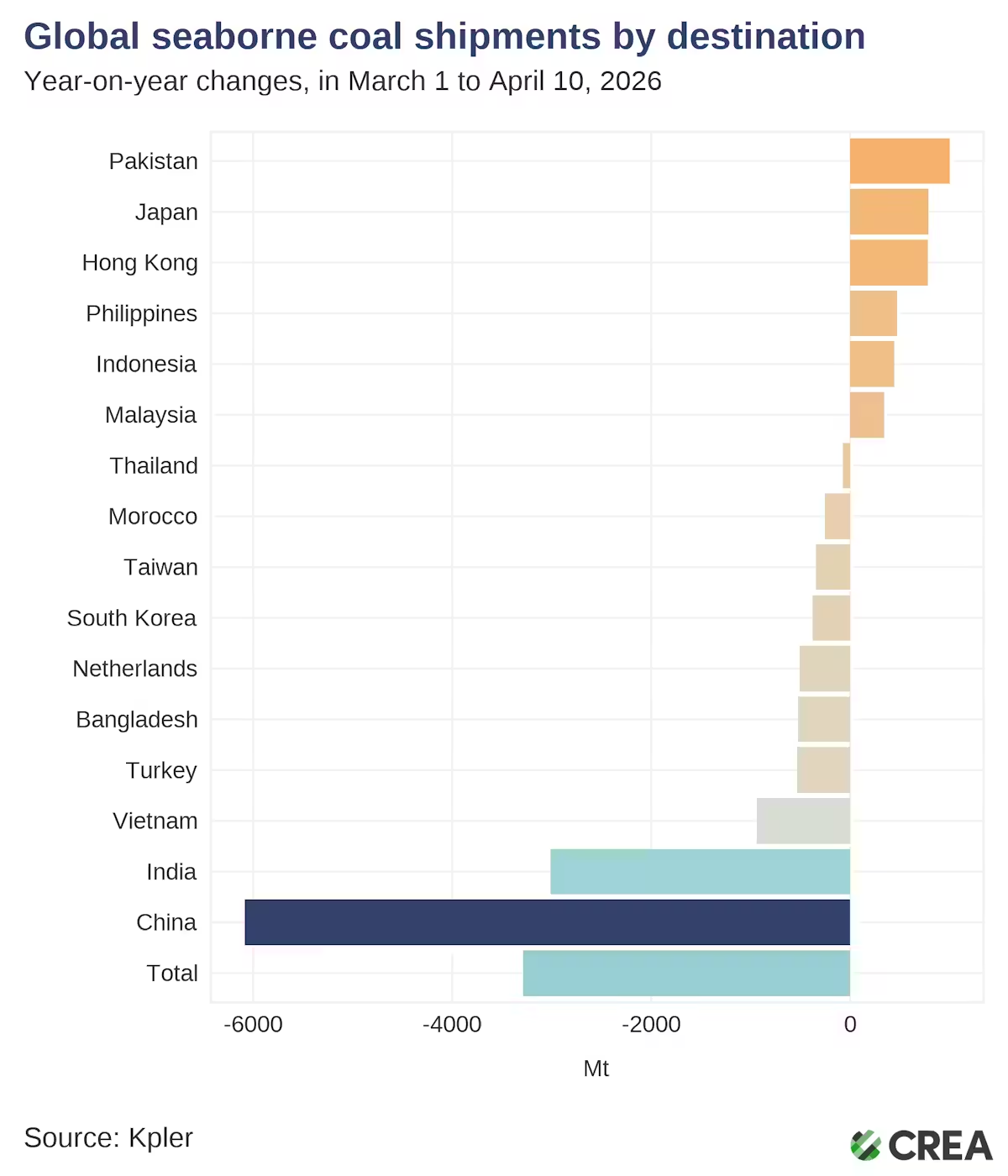
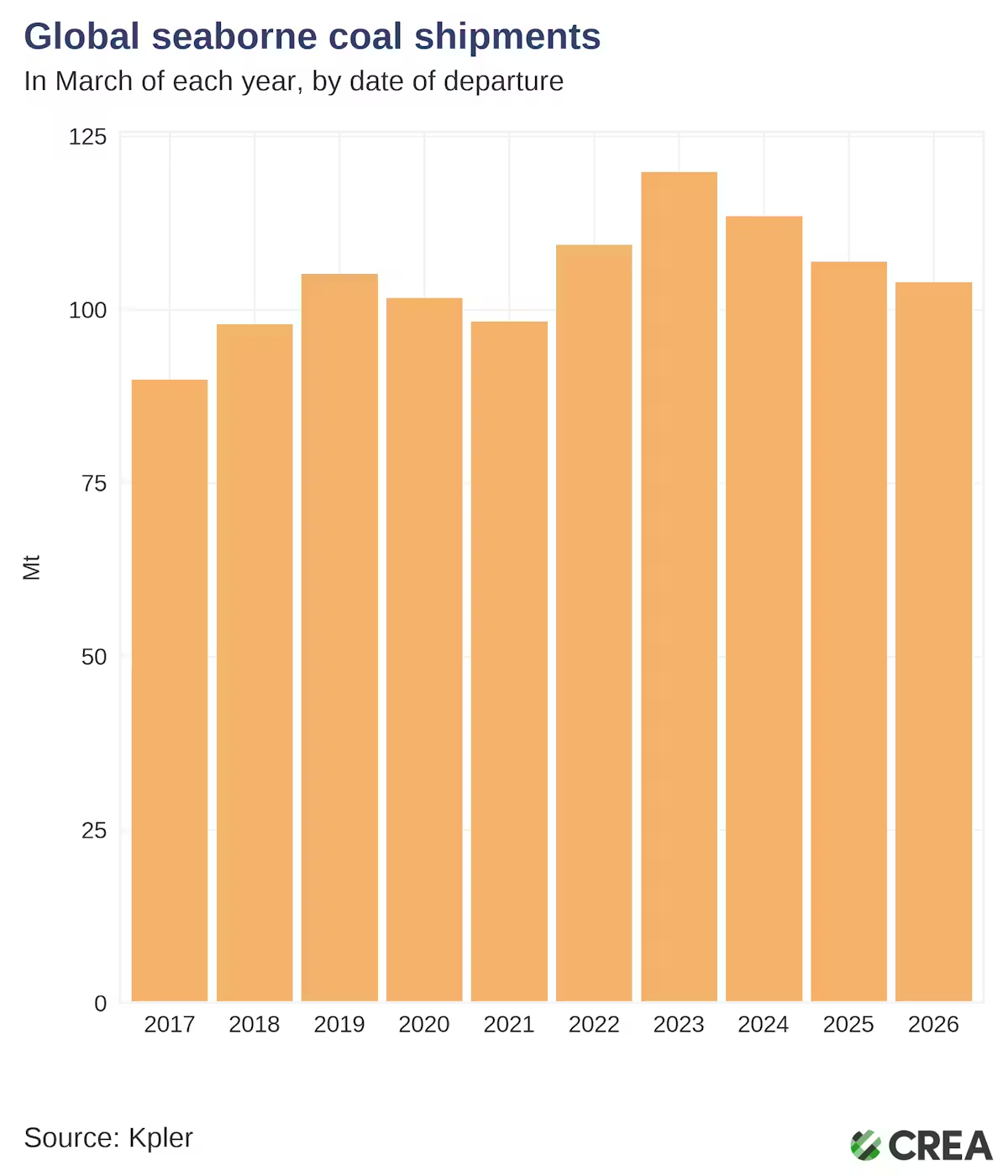
Coal shipments by sea also fell by 3%, reaching their lowest level since 2021, with sharp declines in shipments to China, India, Turkey, and Vietnam.
These findings contradict the common assumption that coal-fired power generation would increase due to energy substitution in response to the crisis.
“In the long term, the outlook for coal is even bleaker. This crisis is making coal more expensive than clean energy and energy storage, further reducing investment interest,” CREA stated in its official publication.
Declining Coal Trends in Indonesia
In Indonesia, the weakening demand for coal has also been evident over the past year.
Coal export value dropped by 19.1% year-on-year compared to the same period from January to May 2025.
Declines were also seen in volume. From January to May 2025, coal export volume reached 156.37 million tons, down 4.65% compared to 163.99 million tons in the same period in 2024.
Previously, the International Energy Agency (IEA) projected that global coal consumption would begin to decline in 2026 and fall below 2024 levels.
In light of global trends, the Indonesian government had initially planned to reduce coal production in 2026 to 600 million tons, a 24% decrease from the approximately 790 million tons produced in 2025.
However, amid geopolitical tensions in the Middle East, the government has begun to view the situation as an opportunity to boost coal production again by considering policy options, such as relaxing production quotas to meet market demand.
Aryanto Nugroho, National Coordinator of Publish What You Pay (PWYP) Indonesia, stated that both the government and the private sector should respond to long-term global trends by gradually reducing production, diversifying the economy, and accelerating the growth of renewable energy.
“Global investors are already moving away from coal. If we continue to push for high production, Indonesia risks being trapped with stranded assets that are no longer viable in capital markets,” he said during a discussion titled “Coal Dependency and the Challenges of Regional Economic Transformation” on Saturday, March 11, 2026.
Martha Jesica Solomasi Mendrofa, Manager of Policy Research and Just Energy Transition at the Institute for Essential Services Reform (IESR), stated that dependence on volatile commodities like coal will only make regional economies more vulnerable amid global crises.
For example, an IESR study in two coal-producing regions—Muara Enim Regency in South Sumatra and Paser Regency in East Kalimantan—shows that revenue-sharing funds (DBH) derived from coal mining taxes and royalties contribute 20–27% of local government budgets (APBD). If coal demand declines, these regions will clearly be affected.
Therefore, the best mitigation strategy is to prepare alternative economic sources to replace coal.
“Developing new economic sectors in coal-producing regions is crucial to minimizing the impact of declining revenues and the broader impacts of coal-based industrial development,” Martha said.
Not a Question of Capability, but of Political Will
IESR’s study identifies several promising sectors that could be developed in coal-producing regions.
In Muara Enim, for instance, sectors such as manufacturing, accommodation, and food services could be strengthened. In Lahat Regency, also in South Sumatra, commodities such as coffee have the potential to be developed into various derivative products from both beans and husks.
In Paser Regency, East Kalimantan, sectors with development potential include financial services, manufacturing, and education.
As alternative economic sources are explored, Martha emphasized that human resources in these regions must also be prepared for a more sustainable economic transition, supported by technology and financing.
An anthropologist from the University of Indonesia (UI), Suraya Afif, noted that extractive economic activities have long caused environmental damage, health impacts, displacement, and the criminalization of communities.
The economic benefits generated by the coal sector are not proportional to the impacts it produces. Therefore, the energy transition must be accelerated.
However, she stressed that the energy transition agenda must incorporate justice considerations to avoid reproducing new inequalities for local communities. “The current narrative of energy transition mostly focuses on reducing carbon emissions without adequately addressing social and economic impacts,” she said.
To achieve a just energy transition, she added, participation from various groups—including workers, local communities, consumers, and citizens—is essential.
“This involvement is crucial to ensure that policies truly take into account broader social and economic impacts,” Suraya concluded.
Source: The conversation