


Makassar, July 1–3, 2025 – Publish What You Pay (PWYP) Indonesia, in collaboration with the International EITI and the EITI Indonesia Secretariat, held a three-day training titled “Enhancing Access and Use of Data and Information by Communities for Oversight of Mining Governance and a Just Energy Transition in Indonesia.” The event brought together community members from mining-affected regions in South Sulawesi, Southeast Sulawesi, Central Sulawesi, and North Maluku.
Introduction to the EITI Indonesia Portal and the Concept of a Just Energy Transition
The first day focused on introducing the Extractive Data Portal, presented by Krisna Darma Putra and Radikal Lutfiardi from the EITI Indonesia Secretariat. The portal compiles various data on the extractive sector, including mining business licenses, state revenue allocations, and transfers to local governments.
This session also emphasized citizens’ right to information, as guaranteed under Law No. 14 of 2008 on Public Information Disclosure. Article 11, paragraph (1), letter E of this law mandates that public bodies must disclose information regarding “agreements with third parties”—meaning that mining licenses (IUPs), Contracts of Work (CoWs), and Coal Mining Concession Agreements (PKP2B) must be made available to the public.
Community representatives found several revelations while exploring the portal, such as the presence of mining companies operating in their areas that had previously gone unnoticed. This raised concerns that several IUPs were issued without the involvement or knowledge of affected local residents, even though these residents are the ones most directly impacted by mining operations.
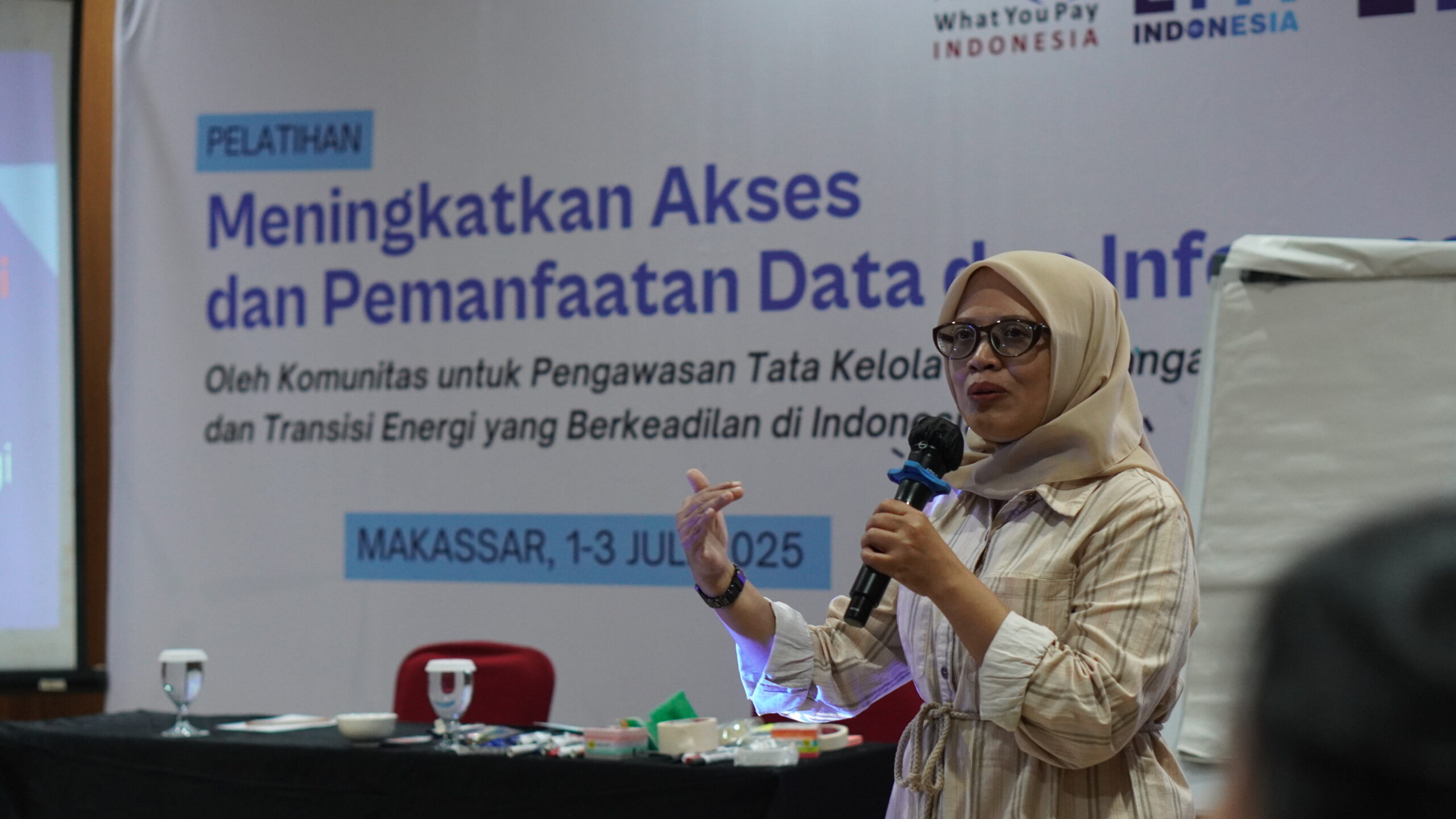
The concept of a just energy transition was also introduced to participants. “A just energy transition is not just about switching from fossil fuels to renewables, but about ensuring that communities living near mining or energy projects are involved, not impoverished, and not further marginalized,” said Tenti Novari, one of the facilitators.
How Can Mining Data Be Made Accessible?
Following the introduction to the Extractive Data Portal, the second day focused on practical questions: how to access the data, and whether the published data is user-friendly and understandable for the public.
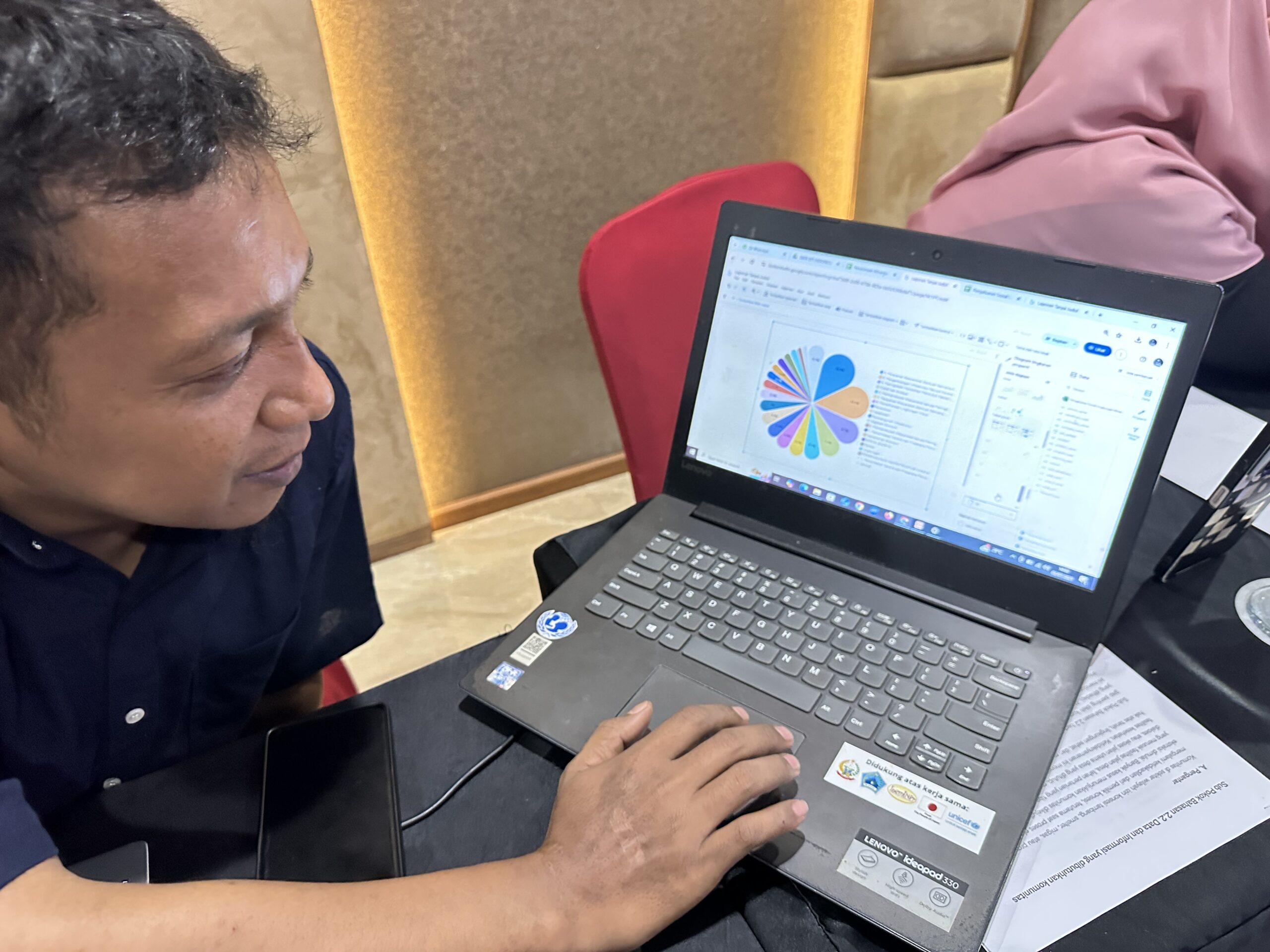
This issue formed the basis of the second day’s training. Although raw data may be available, it remains difficult to read and understand. Irendra Radjawali introduced participants to data visualization techniques using Google Looker Studio to turn raw information into visual advocacy tools. Participants analyzed various datasets and discovered, for example, that mining companies’ CSR funds were often not allocated to crucial sectors like education and environmental protection.
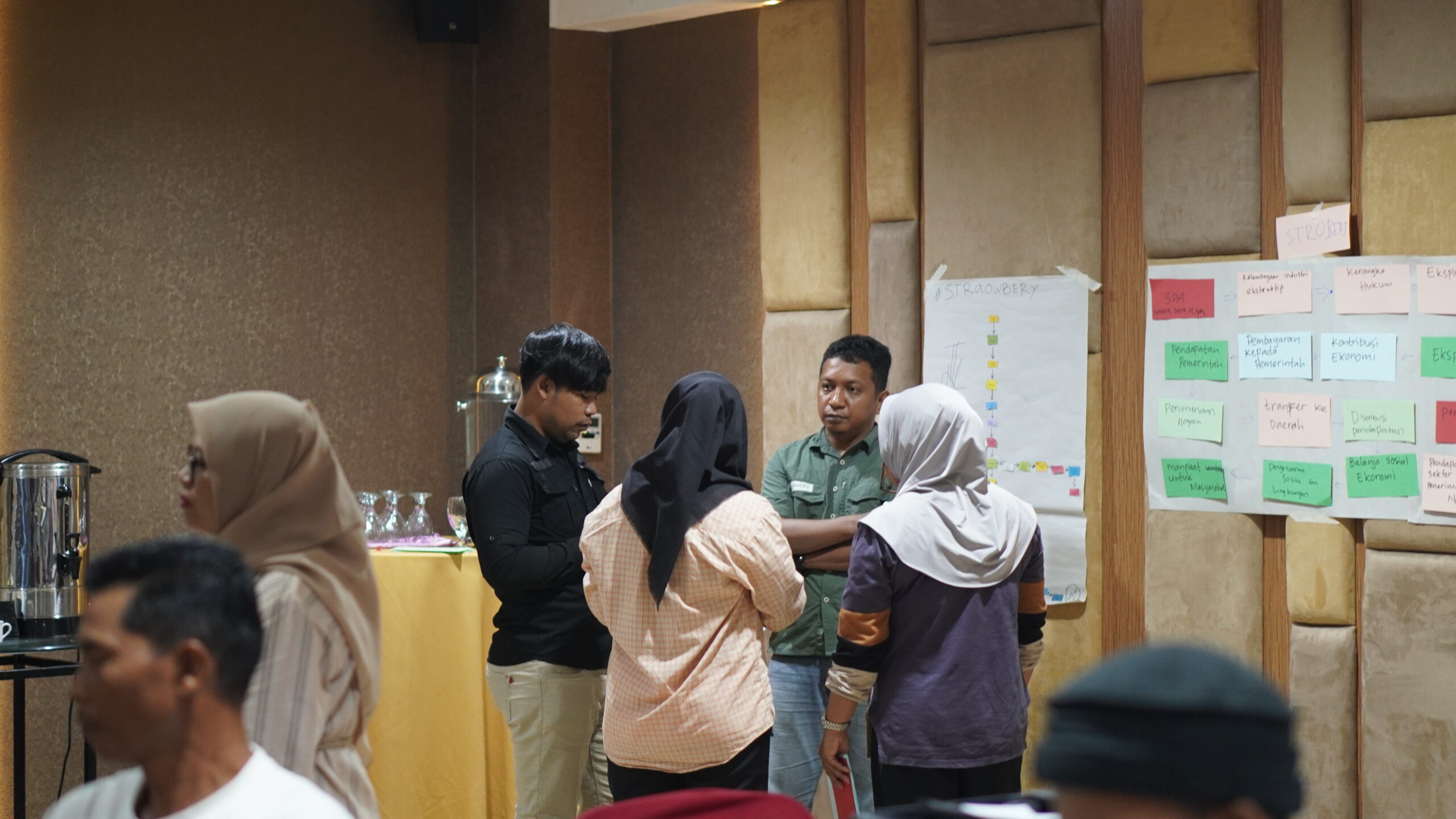
Participants also shared stories from their regions through photos and videos, including environmental impacts like declining seaweed yields in Morowali due to mining activities, and contaminated water sources in Kawasi. Ethical practices in photo and video documentation were discussed, including the need for informed consent before publishing images, as well as crafting narratives that clearly include the 5W + 1H (What, Who, When, Where, Why, and How) for effective communication.
Risk Mitigation and Mapping Advocacy Based on Regional Context
The #savesagea campaign was highlighted as a successful grassroots movement that mobilized collective action against environmental and social impacts caused by mining in Sagea.
However, different regions require different approaches. For example, in Kawasi, where activists face a high risk of criminalization, campaigns must be carried out with greater caution, ensuring digital safety and careful messaging. “We have to communicate more cautiously, like using Signal app, because we’re up against big corporations like Harita,” shared a community member from Kawasi.
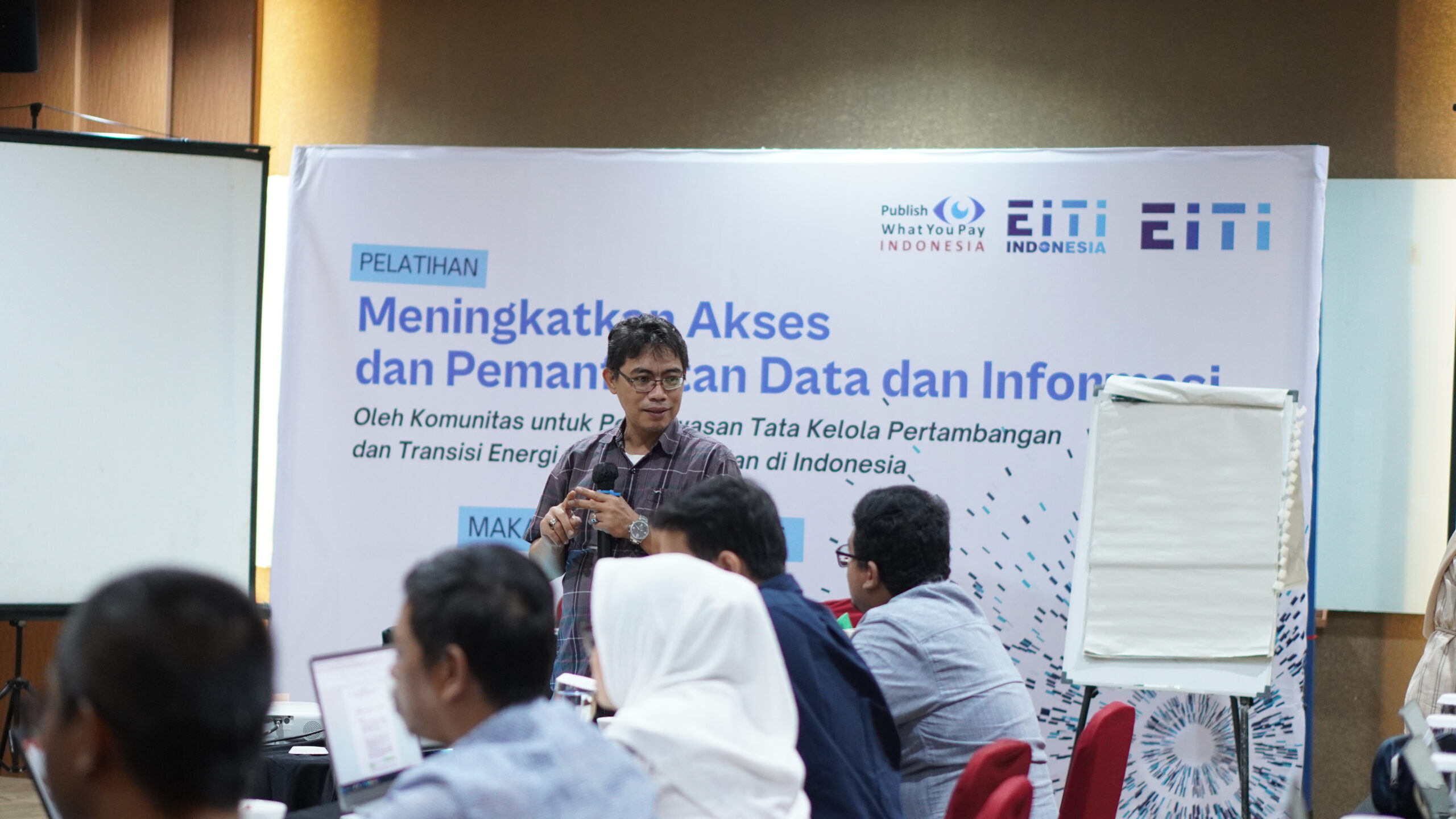
Beyond campaign strategies, legal knowledge was also covered in a session led by Ufudin from KoMIU Foundation, Central Sulawesi, who discussed mining laws as a foundation for community advocacy. He highlighted how powerful companies often employ SLAPP (Strategic Lawsuit Against Public Participation) tactics to criminalize individuals who speak out about mining impacts.
Recommendations for the EITI Indonesia Secretariat
On data completeness, community participants urged the EITI Indonesia Secretariat to include Environmental Impact Assessments (AMDAL) and Work Plans and Budget (RKAB) in the Extractive Data Portal.
Although AMDAL documents are technically public and issued by the Ministry of Environment and Forestry (KLH) as a prerequisite for mining licenses from the Ministry of Energy and Mineral Resources (KESDM), obtaining these documents often involves lengthy administrative procedures.
“Data that communities need but are not yet available on the portal should be followed up. Duplicate datasets, such as those related to CSR, should also be revised,” said Tenti Novari.
Additionally, Ibrahim Zuhdhi Badoh, a facilitator from Auriga Nusantara, emphasized the importance of expanding data coverage to include medium and small-scale IUPs as well as Mining Service Business Licenses (IUJPs). These cover companies involved in drilling, exploration, transportation, processing, refining, and post-mining reclamation services.
Writer: Aulia Sabrini Saragih
Reviewer: Mouna Wasef