Introduction
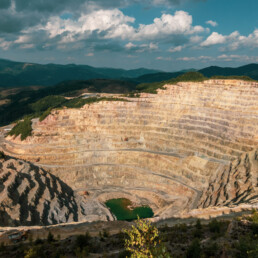
The mineral and coal mining sector (minerba) in Indonesia contributes significantly to deforestation and land degradation, threatening ecosystems and communities. According to TreeMap (2024), mining activities—including open-pit mines, processing facilities, and roads—have resulted in the loss of 721,000 hectares of forest between 2001–2023, with 150,000 hectares of high-carbon primary forest lost. East Kalimantan Province, which holds 38% of Indonesia’s coal reserves, has 1.5 million hectares of mining concessions overlapping with 29% of forest ecosystems, including 55,561 hectares of primary forest (AEER, 2025).
This issue also occurs in the Nusantara Capital City (IKN) area. According to records from the Task Force for Prevention and Eradication of Illegal Mining Activities in the IKN Area (2023), out of approximately 250,000 hectares in the IKN region, there are mines dominated by coal with a total mining opening area of 17,929.58 hectares, of which 3,794.6 hectares are identified as illegal mines. In addition to coal, other mines found include quartz sand, rocks, and even soil excavations. Meanwhile, the government plans to restore 65 percent of the IKN area into tropical rainforests and make IKN a forest city that is carbon-free by 2045, as stipulated in Presidential Regulation (Perpres) No. 64 of 2022 concerning the Spatial Planning for the National Strategic Area of IKN.
Efforts to improve governance in the mining sector have been carried out over the last decade. For example, PWYP Indonesia, from 2014 to 2019, through the Land and Forest-Based Extractive Governance Improvement Program in collaboration with The Asia Foundation’s (TAF) SETAPAK-II Program supported by UKAID through the UK Climate Change Unit (UKCCU), worked with various stakeholders, including civil society and the government, to achieve several outcomes, including: A reduction in the number of non-Clean and Clear (CnC) Mining Business Permits (IUP); Suspension of company activities or blocking of non-CnC IUP status (around 2,509 non-CnC IUPs); An increase in state revenues from the mineral and coal mining sector; Improvements to a more integrated state revenue payment system; The creation of a problem map in reclamation and post-mining policies and implementation, etc. However, the mineral and coal mining sector remains one of the sectors contributing to deforestation in Indonesia.
Improvement efforts have also been made by the government through the One Map Action in the National Anti-Corruption Strategy (Stranas PK) 2023-2024, where indications of unlicensed mining activities in the forestry sector covering 370,410 hectares were found, contributed by more than 500 companies. Stranas PK is currently working to resolve this issue using the mechanism under Article 110B of the Job Creation Law (UU Cipta Kerja). The detailed fine mechanism uses Government Regulation (PP) No. 24 of 2021 concerning Procedures for Imposing Administrative Sanctions and Procedures for Non-Tax State Revenue (PNBP) Derived from Administrative Fines in the Forestry Sector, as well as the Minister of Environment and Forestry Regulation No. 7 of 2021.
On one hand, public participation in planning, discussions, and decision-making on regulations and policies related to the energy transition in the coal sector remains weak. This also applies to monitoring licensing, supervision, and law enforcement in the mining sector, both at the national and regional levels, including in the IKN area.
The lack of public participation is accompanied by limited understanding among civil society in overseeing governance improvements in the mining sector, especially after the end of the National Movement to Save Natural Resources (GNPSDA) in 2018, the enactment of the Mineral and Coal Mining Law (UU Minerba) and the Job Creation Law (UU CK), where not many civil society groups, both at the national and regional levels, are monitoring the mineral and coal mining sector. This is even more limited when linked to IKN, where access is truly very restricted.
Publish What You Pay (PWYP), with support from The Asia Foundation (TAF) through the “Save Forests and Lands through Governance Improvement” (SETAPAK) program phase 4, is implementing a series of activities aimed at strengthening governance and law enforcement in the land and forest-based mineral and coal mining sector in Indonesia.
Program Objectives
- Strengthening transparency and accountability in the mineral and coal mining sector
- Strengthening law enforcement in the mineral and coal mining sector
- Preventing state losses in the mineral and coal mining sector
Activities
- Preparing policy briefs on regulations and policies in the mineral and coal mining sector that integrate GEDSI perspectives
- Conducting a series of focused group discussions (FGD) and workshops
- Facilitating multi-stakeholder forums to discuss and disseminate policy recommendations
Public campaigns
- Organizing training and workshops to enhance the capacity of communities and CSOs in understanding mineral and coal mining governance, reporting violations, and compiling investigative findings.
- Holding multi-stakeholder forums, public discussions, and media campaigns to promote law enforcement, policy compliance, and awareness in the mining sector.
- Supporting community-based monitoring, investigations, and legal assistance to ensure follow-up on mining violation reports.