


Johannesburg – On August 28-29, 2025, Aryanto Nugroho, National Coordinator of Publish What You Pay (PWYP) Indonesia, attended the international conference titled “Reclaiming Industrial Policy for the People: Civil Society’s Role in Green Structural Transformation” in Johannesburg, South Africa. This event was co-organized by The Technology and Industrialisation for Development (TIDE) Centre, University of Oxford, Trade & Industrial Policy Strategies (TIPS) South Africa, and Transnational Institute.
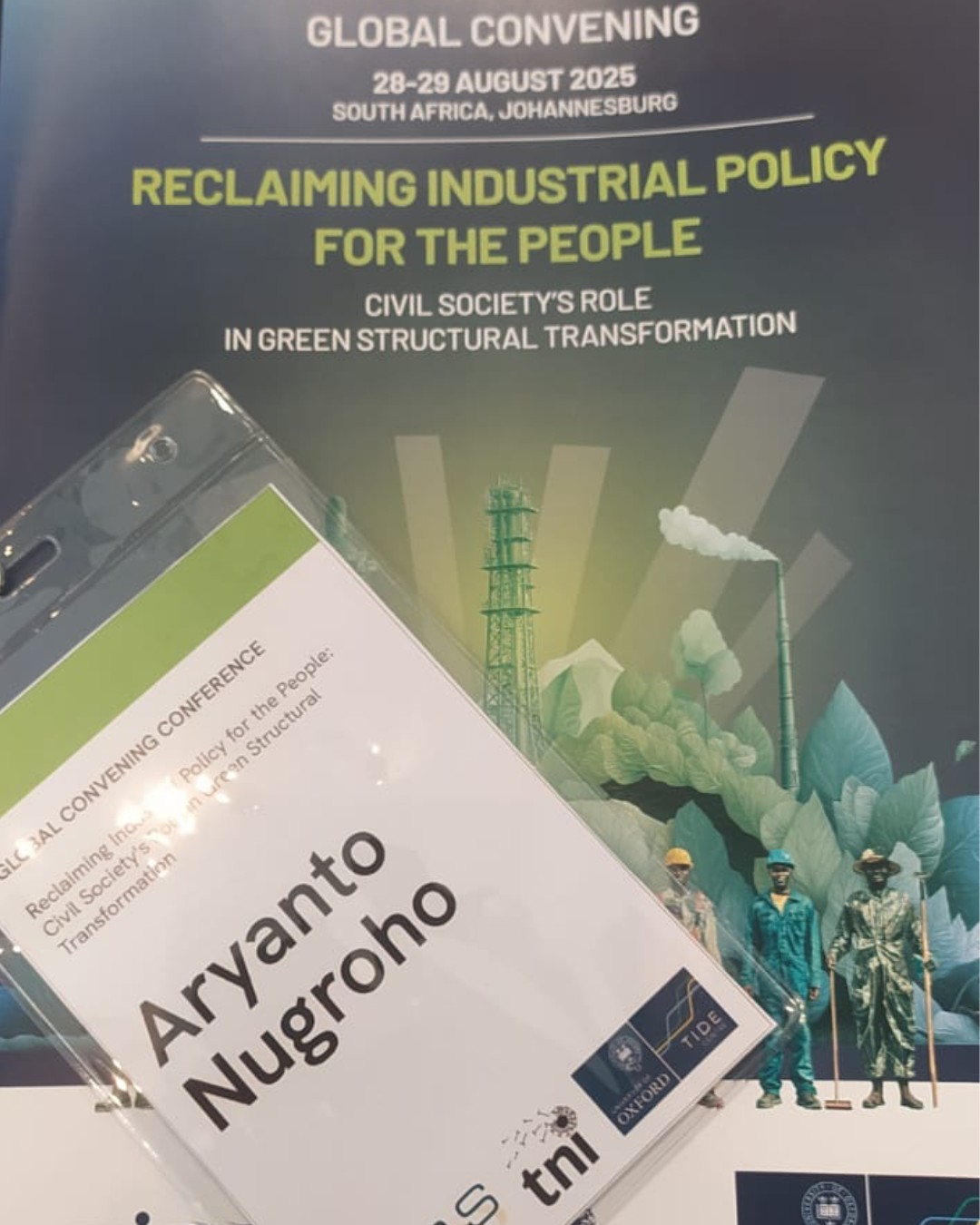
The conference, attended by more than 45 participants from 22 countries—including researchers, labor unions, activists, and policymakers—discussed how civil society can influence industrial policy to be more participatory and socially responsive; opportunities for cross-sector learning and collaboration; alternative models for industrial policy rooted in justice and sustainability; and ways to strengthen the voices of women, informal workers, small businesses, and local communities in the formulation and implementation of policies.
In this opportunity, Aryanto shared perspectives from civil society organizations (CSOs) in Indonesia and other Global South countries, where economies are still heavily dependent on natural resources, making the transition to green industries an unavoidable urgency. However, this transition faces various challenges, such as maintaining a balance between sustainability and equity, addressing economic dependencies, and ensuring an inclusive transformation process for all parties.
On this conference, participants delved into various aspects to democratize the green transition, including reforming financing to end colonial hierarchies through progressive taxation and debt relief; prioritizing local needs through Free Prior Informed Consent (FPIC) and community self-organization; building better evaluation tools beyond just costs; and promoting community-led decisions, knowledge sharing, and bridging formal-informal gaps.
These discussions not only generated bold ideas but also built new alliances among participants. The participants agreed that the green transition must be just (just transition), where no one is left behind, especially vulnerable communities in developing countries that are often victims of natural resource exploitation.
This conference strengthens PWYP Indonesia’s commitment to continue advocating for resource justice and sustainable development. It also serves as a new momentum for an equitable green future.
Writer: Aryanto Nugroho