


The temporary suspension of operating permits for 190 mining companies that failed to place reclamation guarantees is deemed insufficient. The government is being urged to ensure that post-mining reclamation is implemented thoroughly.
Kaltimkece.id reported that the Ministry of Energy and Mineral Resources (MEMR) has temporarily suspended the operations of 190 coal and mineral mining companies, 36 of which are based in East Kalimantan.
This was stated in Letter No. T-1533/MB.07/DJB.T/2025, issued by the Directorate General of Mineral and Coal on September 18, 2025. The letter explained that the suspension of mining activities is a sanction against the 190 companies for failing to provide post-mining reclamation guarantees.
Quoting Bisnis.com, the Director General of Mineral and Coal at MEMR, Tri Winarno, confirmed the contents of the letter. He noted that companies may resume operations if they comply with mining regulations, namely by carrying out post-mining reclamation.
The Ministry also asked the 190 mining permit holders to immediately submit applications for the approval of their reclamation plan documents. The suspension will be automatically lifted once the companies have obtained approval letters and placed reclamation guarantees valid until 2025.
Publish What You Pay (PWYP) Indonesia, a non-governmental organization monitoring the extractive industry, called on the government not only to suspend mining activities but also to ensure that post-mining reclamation is fully implemented.
The concern, according to PWYP’s research, is that mining companies may in fact use these sanctions as a way to evade their responsibilities for environmental rehabilitation.
“The MEMR must remain vigilant against such patterns and consider permanently revoking mining permits (IUPs) for repeat offenders, in order to protect public and environmental interests,” said PWYP Indonesia researcher, Adzkia Farirahman, in a written statement on Tuesday, September 23, 2025.
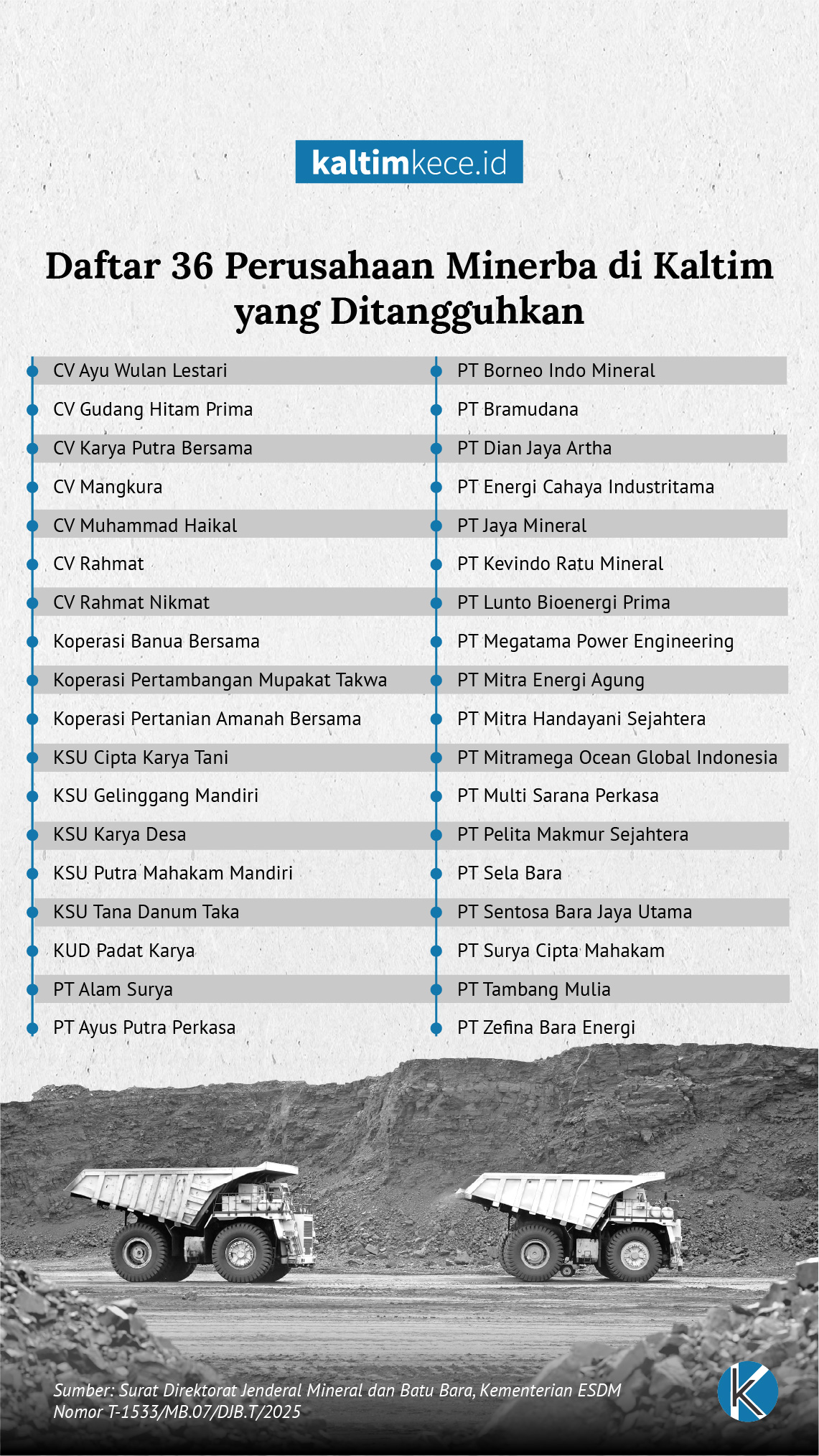 PWYP urged the government to ensure that all mining companies place reclamation guarantees on time, including verifying whether the amounts comply with regulatory calculations. This is essential to avoid shortfalls that could burden both the state and the public.
The values of reclamation guarantees deposited by companies should also be disclosed transparently to the public. Such transparency is crucial for civil society oversight and to ensure accountability, in line with the Extractive Industries Transparency Initiative (EITI), which Indonesia has adopted.
“The government must also conduct regular evaluations of all active mining business permits (IUPs) to ensure compliance, with priority given to environmentally vulnerable regions such as Kalimantan, Sumatra, Sulawesi, and other areas,” added Adzkia Farirahman.
Source: Kaltim Kece