


Balikpapan, 16-17 September 2025 – The role of civil society in improving governance in the mineral and coal mining sector (minerba) is crucial and cannot be overlooked. Community involvement is essential for achieving responsible, transparent, accountable, and participatory governance, encompassing planning, implementation, and oversight. Strengthening public participation is also vital for mitigating negative impacts, such as land grabbing and criminalization, while promoting a just and sustainable energy transition. This ensures public policies truly prioritize people’s welfare and ecological justice.
Recognizing this urgency, Publish What You Pay (PWYP) Indonesia organized a training for representatives of civil society organizations (CSOs) titled, “Understanding Mineral and Coal Mining Governance Following the Fourth Amendment to Law No. 4 of 2009 on Mineral and Coal Mining.” The event took place in Balikpapan on September 16-17, 2025, with participants from CSOs across various regions in Indonesia.
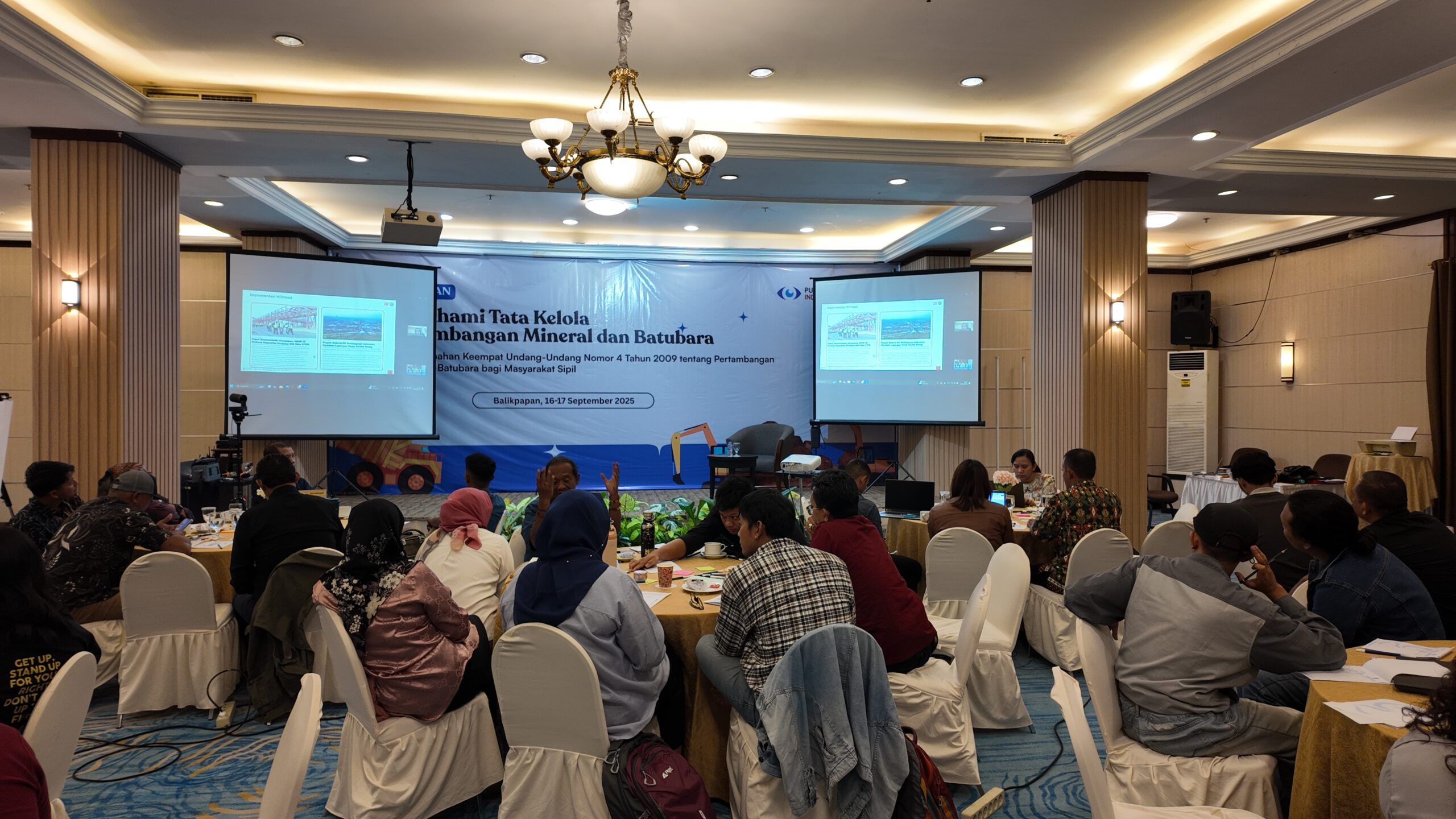
The training aimed to enhance the capacity and role of civil society in advocating for better governance in the mining sector, covering aspects such as licensing, state revenue, and the opportunities and challenges in accelerating a just energy transition in Indonesia.
The opening session featured Siti Sumilah Rita, Secretary of the Directorate General of Mineral and Coal Mining at the Ministry of Energy and Mineral Resources (ESDM), who presented the direction for improving mining governance following Law No. 2 of 2025, the fourth amendment to Law No. 4 of 2009 on Mineral and Coal Mining.
Also present was I Gede Yudistira, representing the Acting Secretary General of Law Enforcement at the Ministry of ESDM, Sahid Junaidi, who discussed strengthening oversight and law enforcement in the mining sector. Additionally, Tri Hayati, an academic from the University of Indonesia, provided insights into the legal history of mineral and coal mining.
Following the opening, the PWYP Indonesia team presented material on the concept of state control over mineral and coal resources, as well as the division of authority between central and regional governments following Law No. 2/2025. This session explored how the concept of state control is implemented in mining governance, emphasizing that natural resources belong to the people. Thus, state management must align with Article 33, Paragraph 3 of the 1945 Constitution, prioritizing the greatest possible prosperity for the people.
Subsequent sessions covered the mechanism for allocating mining permits, now based on licenses rather than contracts, and its implications for governance. The session also explained the licensing process, requirements, and procedures.
On the second day, PWYP Indonesia presented three additional topics. First, the rights and obligations of mining permit holders are outlined, detailing the current commitments under Law No. 2/2025 and the sanctions for non-compliance. A key focus was the issue of reclamation and post-mining obligations.
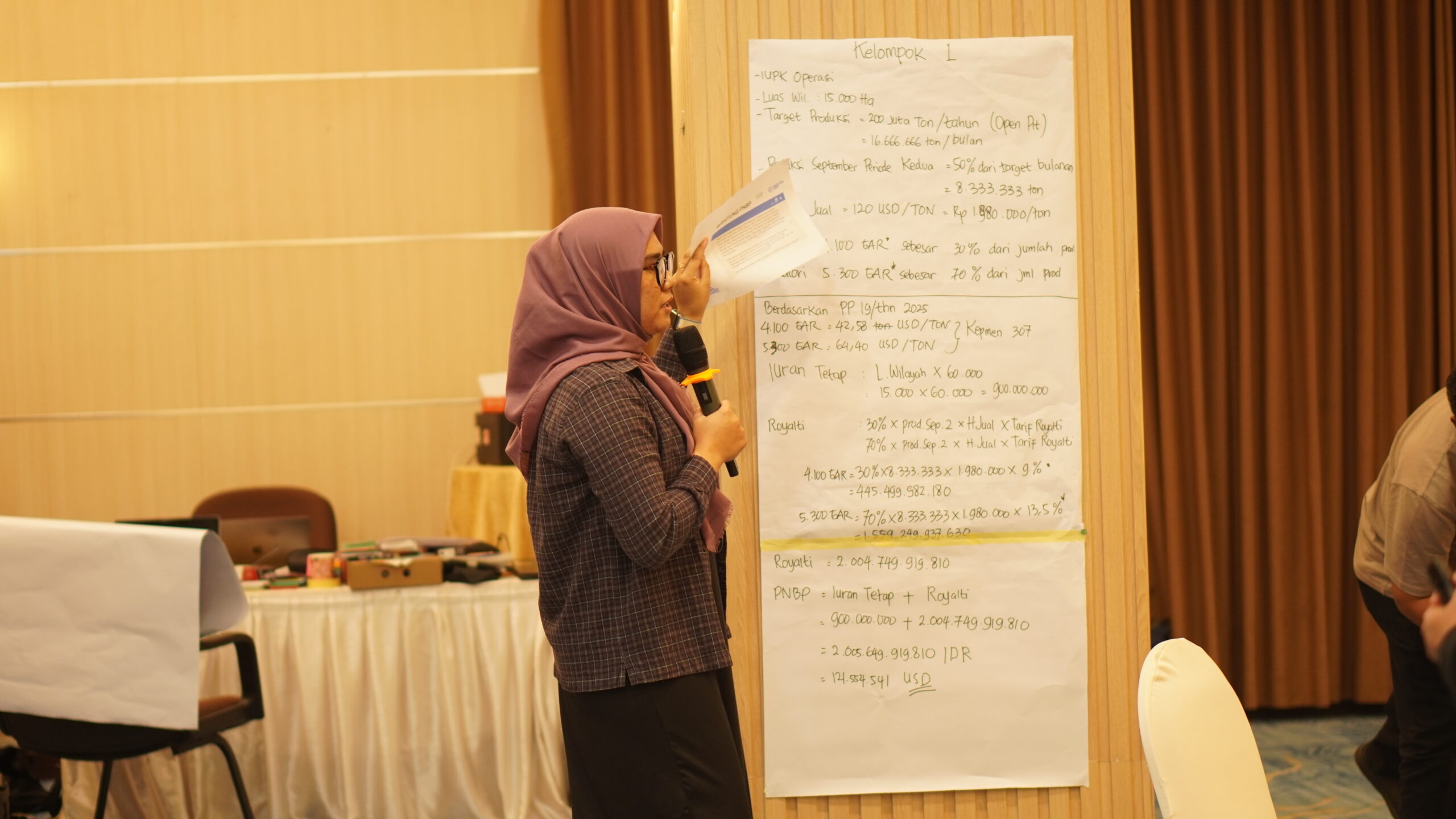
Second, the session addressed state revenue flows from the mining sector, explaining how non-tax state revenue (PBNP) from permit holders reaches the national treasury. Third, it reviewed the mechanism for transferring state revenue from the central government to regional governments.
Throughout the training, participants actively shared experiences and perspectives. Generally, mining sector regulations were deemed comprehensive, but their implementation remains lacking. A notable issue was the weak oversight of reclamation and post-mining obligations. Other criticisms included lenient royalty policies, inadequate law enforcement, a lack of transparency in licensing documents, work plans, and budgets (RKAB), as well as insufficient meaningful community participation. These insights will serve as a foundation for collective advocacy to promote fairer, more transparent mining governance that prioritizes the interests of the people.