


Jakarta – Publish What You Pay (PWYP) Indonesia held a Focus Group Discussion (FGD) titled “Challenges and Opportunities in Shifting Indonesia’s Coal Mining Industry Amid Global Market Uncertainty.” The event took place in Central Jakarta on Monday, 10 November 2025. It is part of PWYP Indonesia’s ongoing research on “Opportunities and Challenges in the Transition of Coal Mining Businesses in Indonesia.”
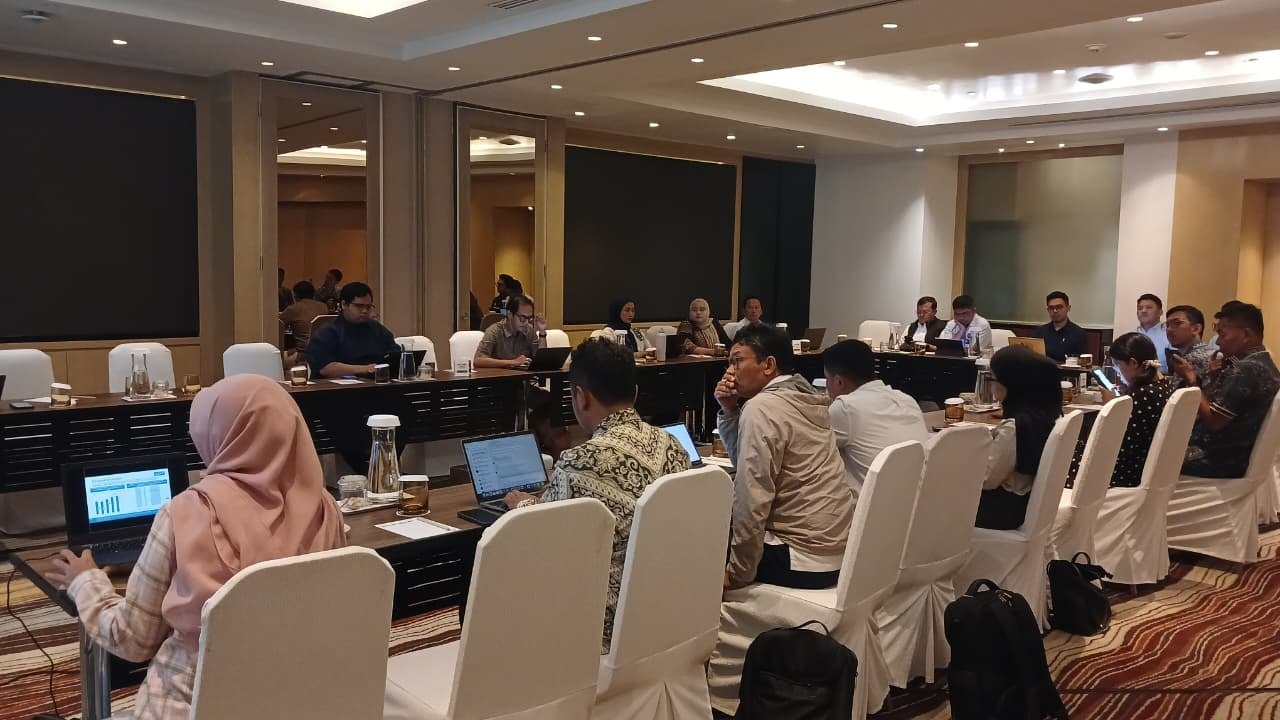
PWYP Indonesia’s National Coordinator, Aryanto Nugroho, noted that the transition from fossil fuels to renewable energy presents numerous challenges. The same is true in the economic context: shifting from coal to the green industry also involves significant hurdles. Aryanto acknowledged that coal remains one of Indonesia’s primary sources of state revenue and energy.
However, global pressure to shift away from fossil fuels toward renewable energy has created new challenges for business actors, particularly within the coal sector. This issue is a central focus of the ongoing study.
“Is there an alternative beyond coal? Is there space and opportunity for coal businesses to shift? If such opportunities exist, what kind of policy framework is needed to support them, and where do the challenges lie? Business actors are key stakeholders in the coal-to-green-industry transition,” he said.
The discussion opened with a presentation from the study’s authors. Respondents included representatives from the Directorate of Coal Business Development at the Ministry of Energy and Mineral Resources (MEMR), the Indonesian Coal Mining Association (APBI), APBI member coal companies, and the Energy Shift Institute.
The study team explained that the research covers at least three components. First, identifying alternative business opportunities for coal companies; second, analyzing challenges and barriers related to the energy transition, including the socio-economic impacts of shifting from fossil fuels to renewable energy; and third, formulating strategies to support transition and diversification for coal mining companies.
Although coal remains a pillar of Indonesia’s economy, its contribution to GDP has slowed since 2023 due to global pressures and rising calls for energy transition. Global demand is projected to continue decreasing as decarbonization accelerates in key export destinations. As a result, diversification has become a strategic necessity—no longer merely an option. On the other hand, business transition efforts require fair regulatory support from the government.
In response to the study overview, Ayi Ruhiat, Coordinator for Coal Commercial Relations at the MEMR’s Directorate-General of Mineral and Coal, confirmed that there is currently no policy specifically focused on energy transition, particularly regarding the shifting of coal businesses. Existing policies focus more on coal downstreaming, such as coal gasification and DME.
However, Ayi emphasized that the coal sector is not disconnected from socio-economic and environmental considerations. He highlighted the Community Development and Empowerment (PPM) program, where companies must prepare a master plan aligned with regional development plans.
“The government’s priority is ensuring that communities remain economically independent once mining operations end. That’s why PPM must include flagship programs,” he said.
Marsuki, Head of Business Development at PT Bukit Asam Tbk (PTBA), expressed appreciation and offered several insights. He said the study provided valuable perspectives for the industry. He acknowledged that business actors are aware that coal is entering a “sunset industry” phase globally. At the same time, coal remains vital for Indonesia’s energy security. He supported the push for diversification but highlighted the need to maintain business continuity.
“If we want to shift, we must evaluate the strength and sustainability of diversification options so the transition is comprehensive,” he said.
From APBI’s perspective, the coal sector is facing increasing pressure—from global transition momentum to domestic policies that do not sufficiently support or favor coal. Policy certainty is crucial, including policies supporting shifts toward green industries.
“If the business is not sustainable, how can companies think about transitioning?” said Marvin Gilbert of APBI.
F.H. Christiono from PT Baturona Adimulya also appreciated the forum for offering new ways of thinking for companies. He emphasized that ensuring the “energy trilemma” is essential for a successful energy transition. He also cited China’s success in converting coal into chemical products as a model Indonesia could consider.
Among the civil society organizations present, the Indonesian Center for Environmental Law (ICEL) underscored the importance of connecting economic diversification with the concept of just transition. For instance, environmental impacts and changes to community livelihoods caused by mining should be integrated into companies’ economic diversification strategies.
The Indonesia Research Institute for Decarbonization (IRID) also highlighted the importance of social protection for workers, particularly in the coal sector, during the transition process.
“Policy mapping is crucial. For us, ensuring social security arrangements is key,” said Hardha from IRID.
Writer: Ariyansah NK
Reviewer: Wicitra Diwasasri & Mouna Wasef