


I believe this pillar guarding public services has not yet completely collapsed. But it is cracking. The choice now is ours: will we keep it standing, or let it crumble under the weight of mining greed?
Shocking news has struck the institution tasked with safeguarding the integrity of public services in Indonesia. Allegations of a Rp1.5 billion fund flow from a nickel company implicating the Chair of the Ombudsman of the Republic of Indonesia, Hery Susanto, serve as a loud warning bell.
Ironically, an institution that is supposed to be the last line of defense for the public against maladministration is instead suspected of being tempted by profits from the extractive sector, long known for its high levels of corruption.
The Ombudsman is no ordinary institution. It is a “child of reform,” born from public demands for clean governance. Established on March 10, 2000, through Presidential Decree No. 44 of 2000, the institution is now 26 years old. Its role was later reinforced by Law No. 37 of 2008 on the Ombudsman of the Republic of Indonesia.
As an “independent” state institution, the Ombudsman holds a vital mandate as an external supervisor of public services. Law 37/2008 grants it broad yet specific authority. Under Article 8, the Ombudsman has the power to compel reported parties to appear, request documents from any institution, and issue corrective recommendations that must be implemented by state officials.
Its duty is not merely to receive complaints, but to ensure the absence of maladministration—ranging from undue delays and procedural deviations to abuse of authority in every service provided by the state to its citizens.
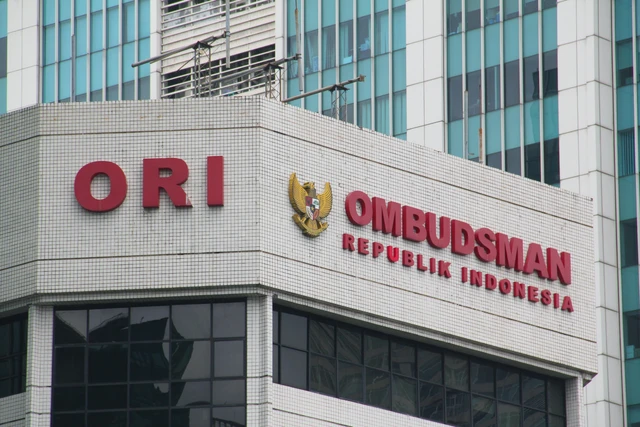 In the natural resources sector, the Ombudsman’s role is particularly crucial. When communities in mining areas face maladministration—ranging from land disputes and water pollution to the neglect of community rights—the Ombudsman becomes the last resort for seeking justice.
We must acknowledge the significant benefits of this institution, including in the natural resources sector. The Ombudsman not only serves as a refuge for communities whose voices are often drowned out by mining activities but also actively provides recommendations for systemic improvement through various reviews.
The Ombudsman has examined the governance issues in the Community Development and Empowerment Program (PPM) in mining, revealing major gaps between concept and practice, the lack of regional-level blueprints, and oversight limited to administrative checks without field verification.
Furthermore, the Ombudsman uncovered serious maladministration in the issuance of Mineral and Coal Work Plans and Budget (RKAB) for the 2021–2024 period, including improper delegation of signing authority without a solid legal basis and prolonged delays in processing RKAB applications beyond standard time limits.
In the context of national investment and downstream industrialization, the Ombudsman has firmly warned that governance toward Indonesia Emas 2045 must be cleansed of maladministration practices to prevent it from becoming a new breeding ground for corruption.
The organization Publish What You Pay (PWYP) Indonesia and several other civil society organizations have a long history of collaboration with the Ombudsman at both the national and regional levels. We frequently engage in dialogue and cooperation to ensure transparency in the mining sector, monitor environmental compliance, and promote the integration of licensing data.
For us, the Ombudsman is a strategic partner in ensuring that the voices of communities affected by mining are heard. However, this alleged case sends a bitter message: the pillar of integrity we have built together is beginning to erode under the pressure of narrow interests.
If the Ombudsman’s integrity is compromised by mining money, oversight of the extractive industry will become ineffective. We cannot expect sharp and objective recommendations if transactional relationships exist at the policymaking level.
The impact? Communities and the environment will bear the cost of the damage. This is not merely an individual ethical violation, but a threat to public trust in state institutions.
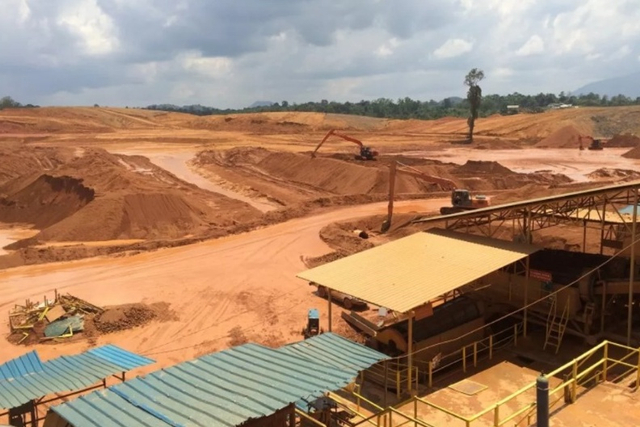 The mining sector—especially nickel, now the “darling” of global downstream industrialization—indeed involves massive financial flows. But behind its shine lies the real risk of state capture corruption. When oversight institutions begin to falter, supervision will stall.
This case must become a turning point for the Ombudsman of the Republic of Indonesia to carry out a comprehensive internal cleanup without exception. Urgent reforms must begin with tightening internal oversight mechanisms and strengthening compliance with the code of ethics to close every loophole for informal lobbying that undermines the institution’s integrity.
At the same time, the Ombudsman must reopen itself to civil society organizations and embrace transparent oversight collaboration. Public openness is the most effective antidote to under-the-table practices.
However, these reforms will be incomplete without an evaluation of the quality of the Ombudsman selection process within the Selection Committee (Pansel) and the House of Representatives (DPR RI). Moving forward, the selection process must truly prioritize integrity and a track record free from conflicts of interest, rather than serving as a platform for political seat-sharing.
I believe this pillar of public service oversight has not yet fully collapsed. But it is cracking. The choice now lies with those who manage it: will they keep it standing, or let it collapse under the weight of mining greed?
Full article available on Kumparan.