


Coal Gasification Projects Require Rp 480 Trillion in Investment. Considered More Suitable for Research Than Application.
The GOVERNMENT has promoted the downstream processing of coal into dimethyl ether (DME) to achieve energy self-sufficiency. However, the project faces numerous challenges. According to Special Advisor to the Minister of Energy and Mineral Resources Satya Hangga Yudha Widya Putra, there are public concerns about the affordability of DME prices. This is particularly relevant because converting LPG to DME would directly affect household users and micro, small, and medium-sized enterprises.
Nevertheless, Satya said DME is more efficient than LPG. The energy produced through coal gasification, he argued, generates a more stable flame. For this reason, Satya emphasized the need to develop DME to reduce Indonesia’s dependence on imported LPG. “If this conversion can be realized, we will conduct public outreach so that there is no miscommunication or unnecessary concern,” he said on Tuesday, December 16, 2025.
At present, the coal-to-DME processing project is still undergoing a feasibility study by the Daya Anagata Nusantara Investment Management Agency (Danantara). The Ministry of Energy and Mineral Resources estimates that LPG consumption in 2025 will reach 10 million metric tons, while national production capacity remains at only 1.3–1.4 million metric tons. This means there is still a deficit of 8.6 million metric tons.
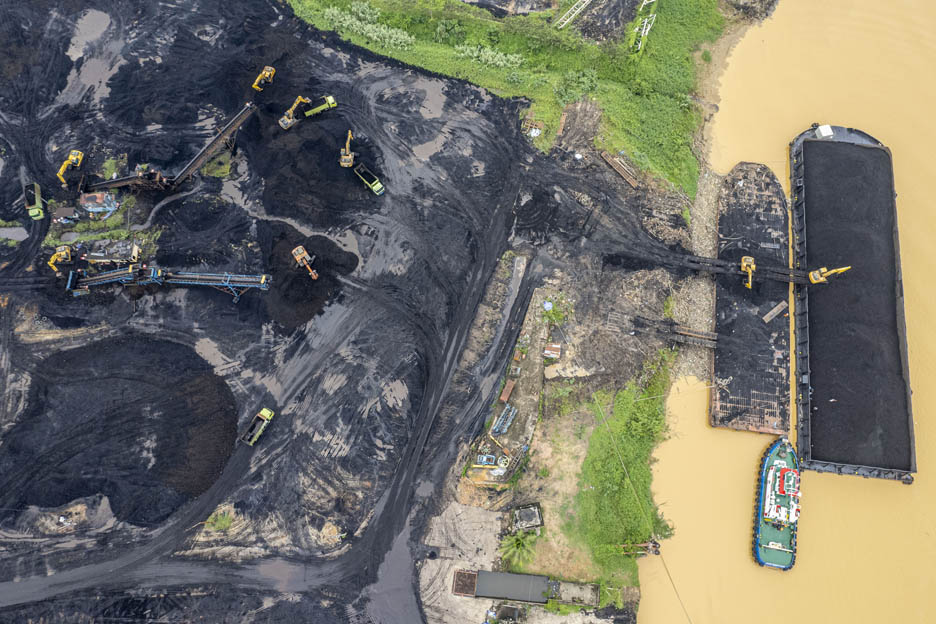
The Ministry of Energy previously conducted DME trials in Palembang and Muara Enim, South Sumatra, from December 2019 to January 2020. In a written statement at the time, the ministry said the flame produced by DME was bluer. In addition, DME does not emit particulate matter (PM) or nitrogen oxides (NOx). On January 24, 2022, President Joko Widodo performed the groundbreaking ceremony for the DME project in Muara Enim. However, the project did not proceed after Air Products, the U.S.-based company that had initially invested, withdrew a year later.
Head of Coal Studies at the Indonesian Mining Professionals Association (Perhapi), F. Hary Kristiono, said coal gasification would not only reduce LPG imports but also help address declining demand for Indonesian coal. Citing data from the Ministry of Energy, coal exports in the first quarter of this year totaled 160 million tons, down from 171 million tons in the same period in 2024. Through DME development, Kristiono said, industry players could expand the utilization of coal reserves.
On the other hand, Kristiono acknowledged that coal gasification projects require massive financing. The estimated investment requirement is US$1,100 billion (approximately Rp 480 trillion), to be disbursed over the next three decades. “Without strong commitment from the state and support from the private sector, this energy downstreaming will not materialize,” he said in late May 2025.
Economist Muhammad Ishak Razak of the Center for Reform on Economics argued that DME is not a practical solution to reduce LPG imports because it is not cost-effective. According to him, this downstream coal-to-DME project requires significant capital investment and advanced technology, making DME more expensive than LPG. If supported by subsidies, the burden on the government would become even heavier.
Ishak suggested that, for now, DME development should be limited to research until a more cost-effective technology is identified. To reduce dependence on LPG imports, he recommended that the government build household gas networks to use domestic liquefied natural gas (LNG). “In the initial stage, there will indeed be costs to build gas networks. But this is a one-time investment with long-term benefits,” he said.
National Coordinator of Publish What You Pay (PWYP) Indonesia, Aryanto Nugroho, also expressed doubts about the effectiveness of DME as a solution to the LPG deficit. According to him, the project faces structural challenges, including a lack of domestic technology and substantial investment requirements. Aryanto said the withdrawal of Air Products as an investor in 2023 demonstrates the project’s high risk. “Instead of reducing the deficit, the DME project actually reinforces dependence on fossil energy and contradicts the 2025–2034 Electricity Supply Business Plan, which targets a 24 percent reduction in fossil energy,” he concluded.
Source: Tempo