


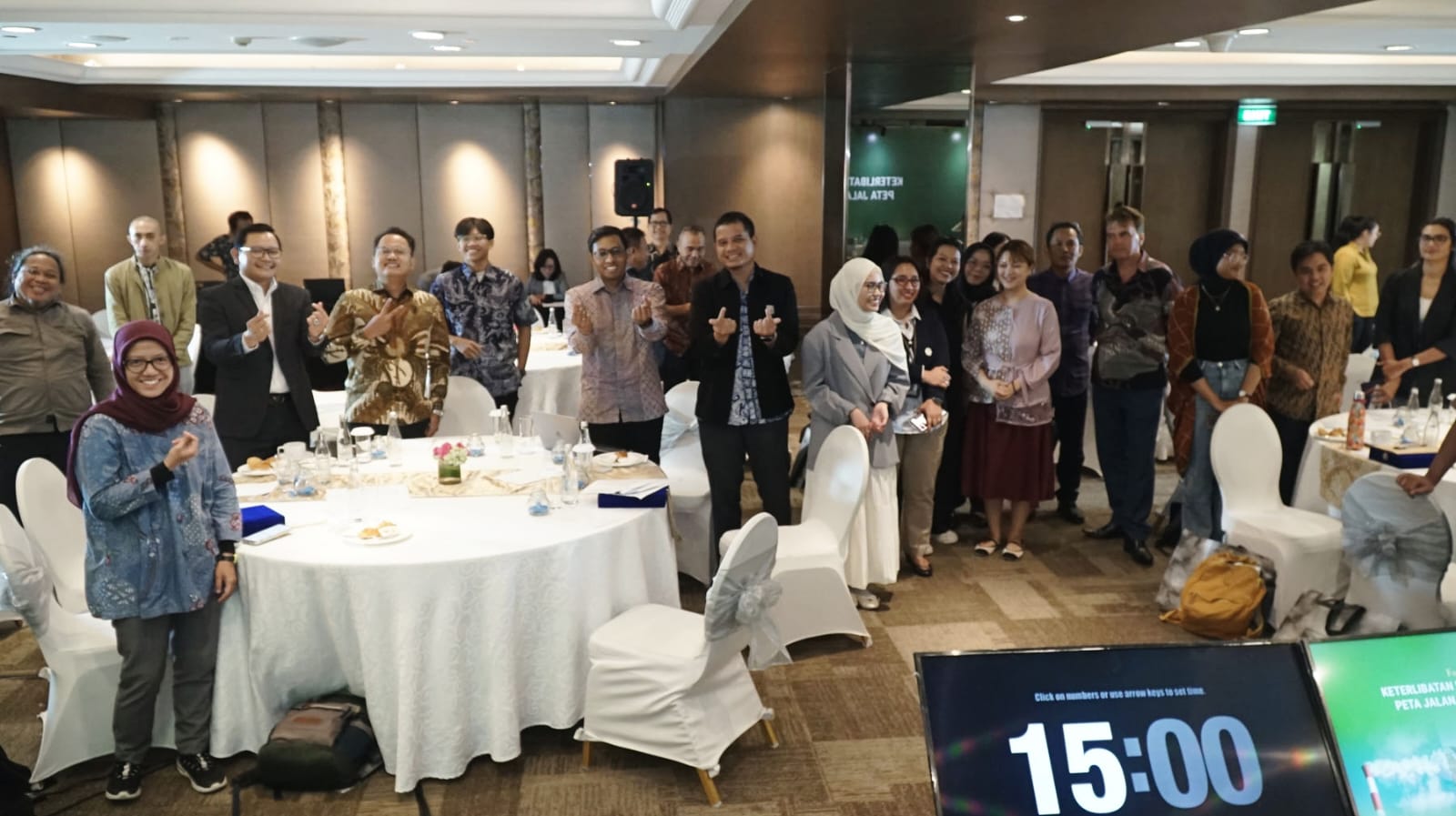
Jakarta, August 27, 2025 – The Indonesian Mining Experts Association (PERHAPI) held a focused discussion titled “Collaboration between NGOs and the Private Sector for a Low-Carbon Nickel Industry.” The forum brought together a number of civil society organizations, including Publish What You Pay (PWYP) Indonesia and Koaksi, to explore the potential for cross-sector collaboration in supporting the decarbonization of Indonesia’s nickel industry.
As a panelist, Mouna Wasef, Head of the Research and Advocacy Division at PWYP Indonesia, raised a critical question: is the involvement of local communities and civil society organizations in the extractive sector still limited to tokenism, or is it moving toward meaningful participation? This question served as an entry point to emphasize that meaningful participation must go beyond mere symbolic presence. Genuine participation requires transparency and accountability in mining governance as the foundation for building public trust. In addition, decision-making processes must be carried out through inclusive dialogue that equally involves communities, government, and companies.
Mouna also stressed the importance of participation mechanisms that ensure community voices do not stop at formality but instead lead to transparent, measurable, and traceable decisions. Community rights must be recognized—not only heard, but also respected and acted upon. To achieve this, long-term trust-building is needed through data openness, fair access to information, and the provision of accountability instruments that enable citizens to be effectively involved in governance.
Furthermore, Mouna highlighted the governance principles based on rights and obligations: the right to know through transparency, the right to demand through accountability, and the right to be involved through participation. From this perspective, the state has an obligation to provide institutions and forums that guarantee the sustainability of these three rights. On the other hand, meaningful participation also brings strategic benefits for companies, such as avoiding reputational risks, preventing social conflicts, and strengthening their social license to operate.
The forum also highlighted relevant global initiatives, one of which is the Extractive Industry Transparency Initiative (EITI). EITI requires active civil society involvement, multi-stakeholder groups, public debate spaces on extractive governance, and data disclosure. This aligns with other international best practices, such as the UN Resource Management System (UNRMS), OECD Due Diligence Guidelines, ICMM Mining Principles, and the Initiative for Responsible Mining Assurance (IRMA), all of which emphasize inclusive engagement, respect for human rights, and accountability across the mineral supply chain.
In addition, Ridwan Arif from Koaksi emphasized that the energy transition has the potential to create significant opportunities for green jobs. The shift toward renewable energy and the growth of its supporting industries are seen as being able to absorb a substantial workforce, particularly among young people and local communities in mining regions. To ensure these benefits are distributed fairly, inclusive and participatory policies are needed so that marginalized groups also gain access to new economic opportunities. Through multi-stakeholder collaboration involving government, industry, and civil society, the energy transition can not only reduce carbon emissions but also strengthen climate justice and social welfare.
Looking ahead, the discussion underlined that local communities and civil society organizations must continue to fight for participation spaces through various channels, including EITI. Meaningful participation will not only promote fairer and more transparent mining governance but also ensure that the transition to a low-carbon industry truly serves communities, respects their rights, and opens the way toward a sustainable development future with inclusive green jobs.