


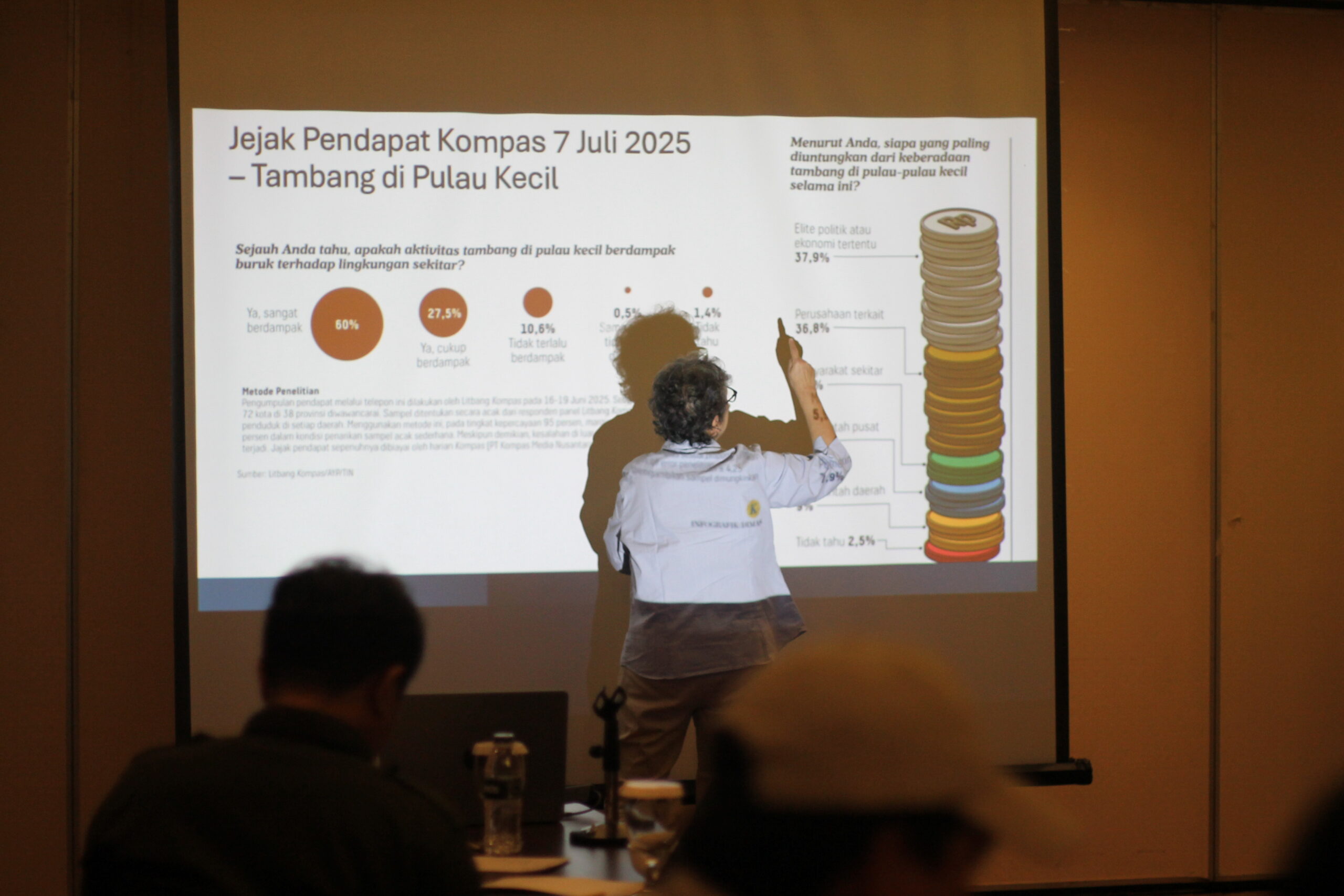
Jakarta, July 10, 2025 – Publish What You Pay (PWYP) Indonesia, in collaboration with the #BersihkanIndonesia Coalition, held a focused discussion titled “Mining Frenzy in Coastal Areas and Small Islands: Defiance of Law and a Crisis of Social and Ecological Justice.” The hybrid event, held in Central Jakarta, served as a crucial platform to address the urgent need to protect small islands from the threat posed by the mining industry.
The issue of nickel mining in the Raja Ampat region has exposed the reckless pursuit of mining, even on small islands, including areas renowned as global hubs of marine biodiversity. Several islands in Raja Ampat have become targets for nickel mining operations.
Five companies hold mining permits (IUP) for nickel in the region: PT Gag Nikel (GN) on Gag Island, PT Anugerah Surya Pratama on Manuran Island, PT Kawei Sejahtera Mining on Kawei Island, PT Mulia Raymond Perkasa with concessions covering Manyaifun and Batang Pele Islands, and PT Nurham on Waigeo Island.
The government has responded by revoking the mining permits of four of these companies, leaving only PT Gag Nikel with a 13,136-hectare concession on Gag Island. However, this is not a solution to freeing small islands from the grip of mining. The government’s rationale for revoking the permits was based solely on technical grounds, and PT Gag’s permit remains untouched.
 The failure to revoke PT Gag’s permit contradicts Law No. 1 of 2014, which amends Law No. 27 of 2007 on the Management of Coastal Areas and Small Islands (PWP3K). This law explicitly prohibits the designation of small islands for mining. The Constitutional Court’s rejection of PT Gema Kreasi Perdana’s (GKP) judicial review request against the PWP3K Law, through Decision No. 35/PUU-XXI 2023, should further reinforce the government’s stance that small islands are not for mining.
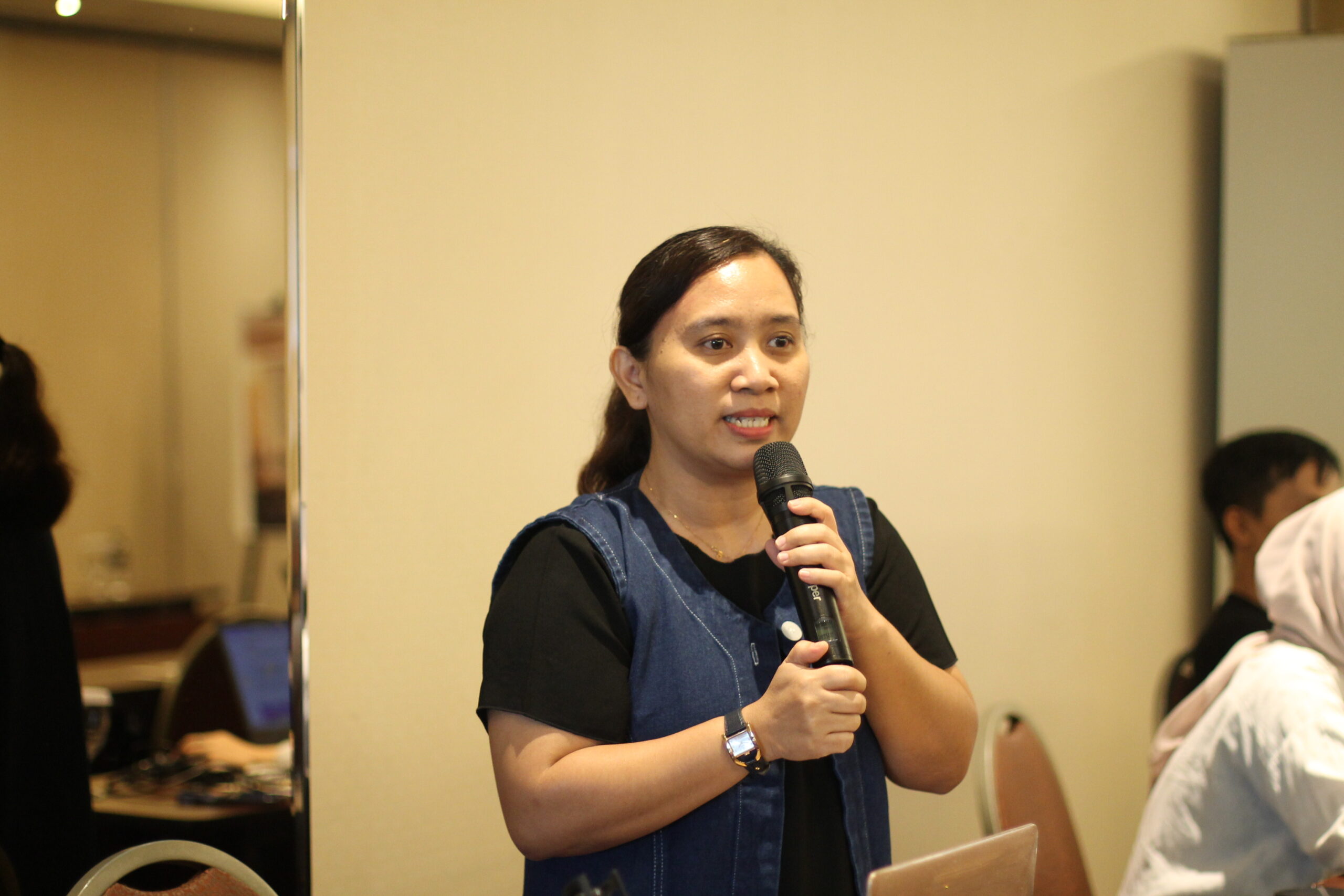 “This discussion aims to sharpen our arguments regarding the debate on mining on small islands. The Constitutional Court’s ruling exists, the PWP3K Law exists, yet the reality remains far from what it should be. We aim to refine our perspective for future advocacy,” said Meliana Lumbantoruan, Deputy Director of PWYP Indonesia.
Speakers at the event included Suraya Afiff, an environmental anthropologist from the University of Indonesia (UI), Rugayah from BRIN’s Center for Biosystematics and Evolution Research, Mulyati Rahayu from BRIN’s Center for Ecology and Ethnobiology Research, and Elvita Trisnawati from the Indonesian Center for Environmental Law (ICEL).
Mining on small islands, particularly in Raja Ampat, is not a new phenomenon in Indonesia. Previously, mining activities took place on small islands in Southeast Sulawesi, such as Wawonii and Kabaena, as well as other small islands across the country. Despite the existence of the PWP3K Law and the Constitutional Court’s ruling affirming that small islands are not for mining, nickel mining and exploitation on these islands continue to this day.
The government has not only looked the other way but has also defied the law by allowing nickel mining operations to persist on small islands. The environmental damage and decline in quality of life caused by these activities are undeniable.
Among the speakers, Suraya Afiff emphasized the importance of social change in halting mining on small islands. Rugayah and Mulyati from BRIN highlighted the rich biodiversity of Wawonii Island, its benefits to local communities, and the destructive social and environmental impacts of mining on small islands.
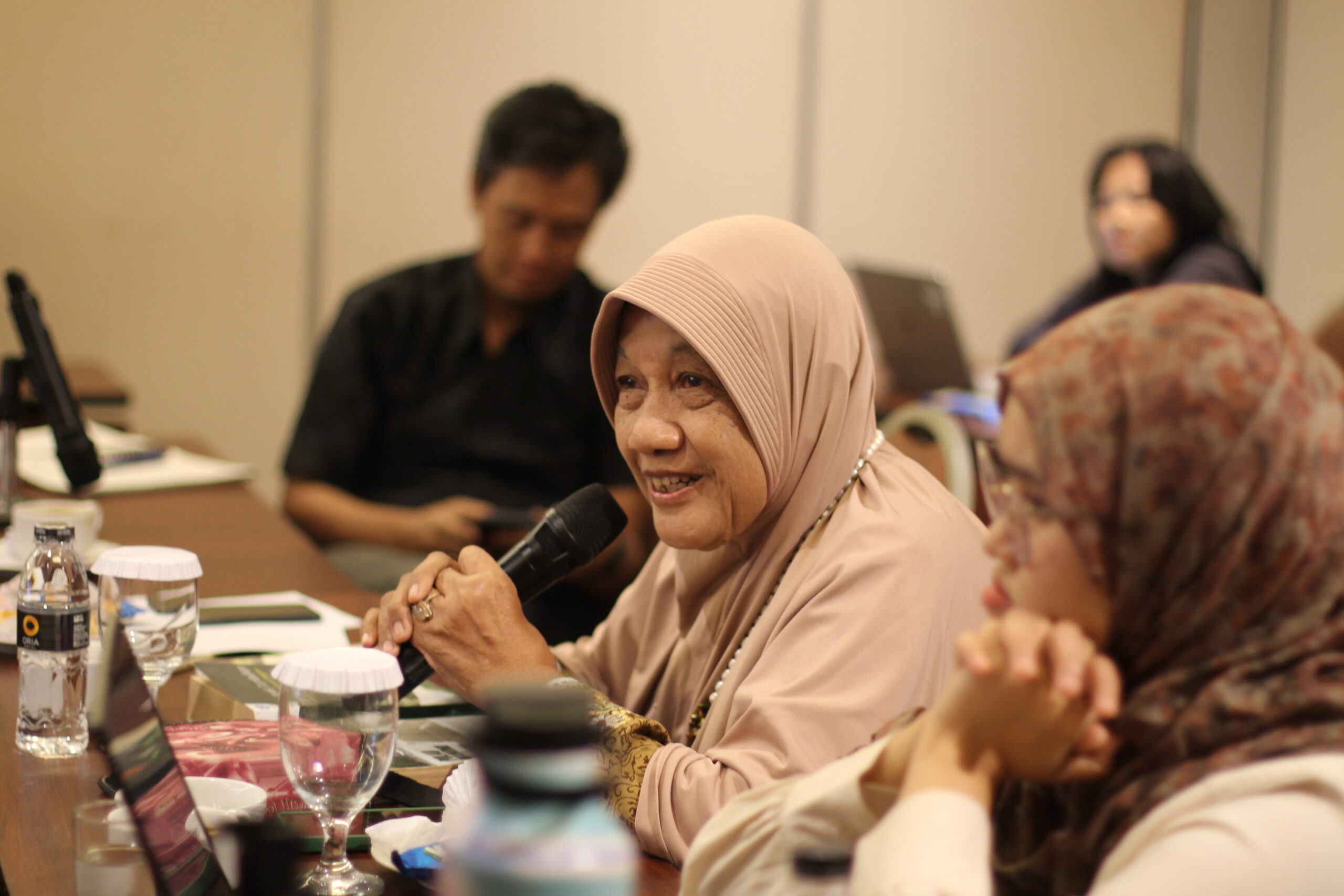 Elvita Trisnawati from ICEL analyzed the legal standing of mining permits and national law in cases involving mining on small islands, such as Wawonii and Raja Ampat.